
















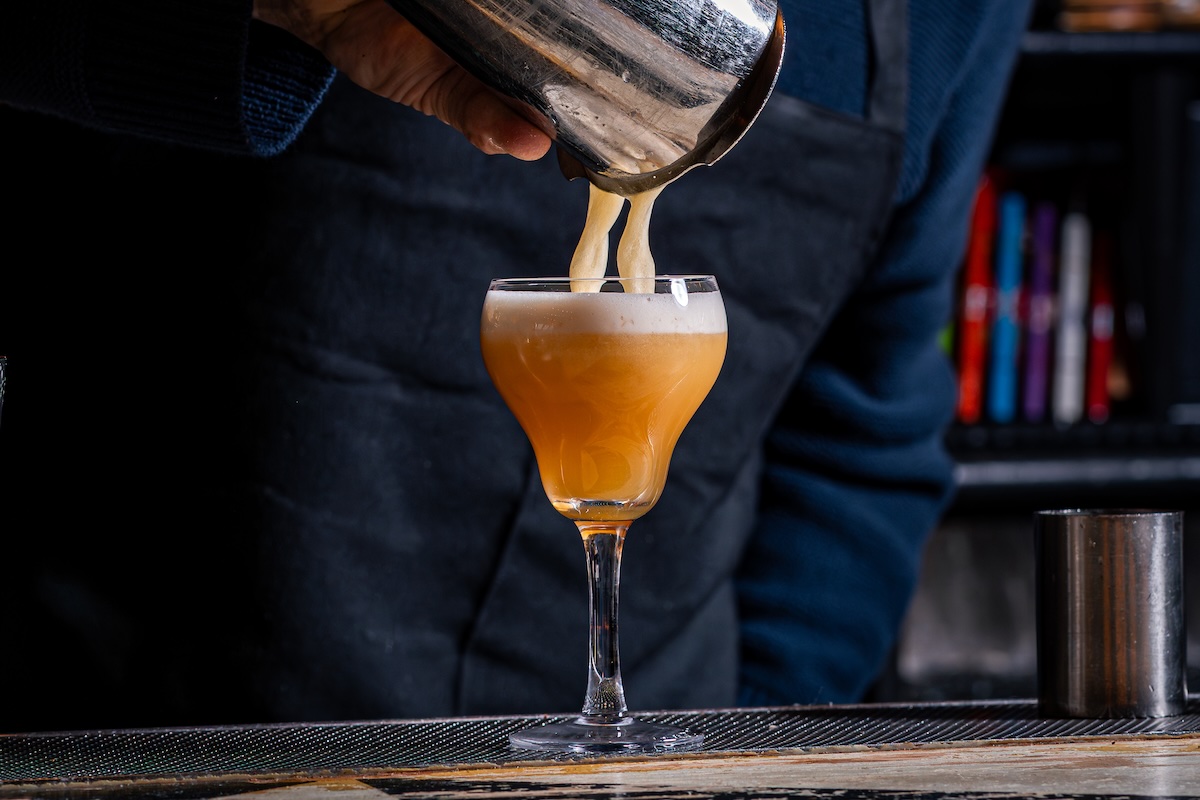
Roasted, Toasted and Smoky Sips
Tapping depth of flavor beyond the usual spirits
Roasted, Toasted and Smoky Sips
Tapping depth of flavor beyond the usual spirits
By Leigh Kunkel
March 18, 2026
By Leigh Kunkel
March 18, 2026


Ingredients that showcase smoky, roasted and toasted elements are moving from subtle accent toward big, bold flavors. Not to be lumped in with the extreme spiciness craze that began in the late aughts, this trend is marked by sophisticated flavor layering, as less common tasting notes step into the spotlight. Beyond menu developers, beverage directors are also taking note.
These earthy, rich profiles are particularly well-suited to drink menus because they expand the palates available without necessarily increasing the number of ingredients used. “Smoky and toasty flavors add depth and intrigue,” says Ali Martin, partner and director of the cocktail program at The Up & Up in Manhattan, N.Y. These deep flavors add complexity, while also allowing brighter notes, like citrus or herbs, to shine.
And while smoke and toast notes are related, they’re unique in what each brings to a drink. With beverages, smoke is often used for its aromatic qualities: Ingredients exposed to smoke will absorb phenols, a byproduct of the burning process, giving them an earthy, slightly bitter edge. Toasted and/or roasted ingredients rely on the Maillard reaction, which uses heat to transform proteins and sugars at the molecular level and develops warm, caramelized notes. How smoke and toast are incorporated into a drink also vary—smoke can be added as an ingredient itself, but toasting and roasting must happen to ingredients.
Eager to bring a new flavor dimension to your beverage menu? Check out some of the ways operators are embracing the trend.
Smoky Spirits

[/media-credit] At Mama Mezze, the Harissa Margarita triples the smoky notes with mezcal, smoky chile liqueur and harissa.
Smoke and char have long been components of the spirit world. Scotch whisky gets some of its foundational tasting notes from the peat smoke used to dry the barley used in its mash, while mezcal is made by roasting agave hearts in an underground oven, locking in those smoky notes. And both bourbon and tequila are frequently aged in charred oak barrels that impart both color and flavor to the finished product.
At the Up & Up, Martin relies on several different smoked spirits to make the signature As Much As a Duck cocktail, a riff on a mezcal sour that incorporates scotch and Amaro Sfumato Rabarbaro, a smoked rhubarb liqueur, for an extra kick. “In this cocktail, the combination of mezcal and blended Scotch creates layered smoke rather than a single-note intensity,” she says. “Amaro Sfumato reinforces that character with a darker, earthy bitterness.” And even after being on the menu for six years, As Much as a Duck remains one of the bar’s most popular drinks; Martin suspects that if the Up & Up were to ever remove it, guests would “likely revolt.”
Although a spicy margarita is an all-but-guaranteed favorite, New York’s Mama Mezze wanted to give it some Mediterranean flair. So Dave Ferrara, who oversees the restaurant’s bar program, turned to harissa. The resulting Harissa Margarita combines mezcal, smoky chile liqueur Ancho Reyes, Aperol and the namesake paste for a smoky, spicy cocktail that’s a smash hit with guests.
“Smokiness in a cocktail like this provides a different level of depth and roundness to the spice component,” Ferrara says. “A jalapeño would, for instance, bring a more primary level of heat and less smoke.” The fusion of Latin and Mediterranean flavors is a great way of incorporating a trend while still staying true to the restaurant’s vision. “All of the ingredients work so well together to create a punched-up cocktail that’s citrusy, smoky and full of depth while still giving the people what they want.”
Give Them a Show

[/media-credit] At Barsa, the Chaand Shower (left) and Barsaat Aam Jhaas (right) demonstrate how smoke is a viable pathway to richly flavored cocktails—no spirits required.
Smoke can be a showstopper when it’s used as part of a drink’s presentation. At Barsa, a contemporary Indian restaurant in Durham, N.C., it was an all-hands team effort to create nonalcoholic drinks that are smoky surprises for the eyes and tongue.
The Chaand Shower (meaning “moon drizzle” in Hindi) uses burnt rosemary to give the drink depth and drama. “Smoky and toasty notes excited us because they instantly turn a sweet mocktail into something more grown‑up and story‑driven,” say owners Arunkumar Vijayakumar and Chandrasekar Yadla. The burnt rosemary is placed in a hurricane glass topped with a coaster to capture the smoke. Then, a blend of mango, passion fruit and coconut water are poured through the smoke and topped with club soda.
Smoke is especially effective in non-alc drinks because it can replace some of the depth usually created by spirits. “The burnt rosemary’s dry, herbal character frames the bright, tropical flavors, keeping them from feeling overly sweet and helping everything stay in balance,” says Sunny Singh, general manager.
For the Barsaat Aam Jhaas (or Smoky Mango Mist), Barsa goes a little more new school, using molecular gastronomy techniques for a spectacular smoky presentation. The drink starts with a combination of mango, tamarind and citrus for a classic Indian sweet-sour base. From there, the team wanted to add smoke without losing the drink’s light, fresh profile: “Smoky elements fascinate us because they instantly add drama and a sense of memory—yet they can easily overpower if you’re not careful,” advise Vijayakumar and Yadla. The solution came in the form of an encapsulated bubble of green apple smoke that floats on the surface of the drink like a cloud and bursts when sipped.
The smoke frames the other flavors rather than fighting them, “so the drink stays balanced: bright and juicy at the core, with just a whisper of misty, smoky intrigue around the edges,” says bartender Jevian Rodrigues.
Try Something Toasty

[/media-credit] The earthy, toasted notes of hojicha are balanced by the crisp sweetness of Honeycrisp in the Hojicha Highball at Kiko, with layers of yuzu and cinnamon rounding out the flavor profile.
The warm, nutty flavors brought out by toasting or roasting an ingredient can add a delicious complexity to old favorites. That’s exactly what Leo Robitschek does with his Toasted Coconut Negroni. Robitschek, the founder of Second Sip low-ABV gin, wanted to create something that felt familiar but boasted a new dimension. “In cocktails, smoky and toasty flavors can create a sense of richness and depth that’s sometimes hard to achieve with spirits alone,” he says.
To do that, he toasts unsweetened coconut chips to a golden brown, then uses a water bath to infuse them into already-batched Negronis and filters out any remaining coconut oil. The addition of African honeybush tea brings a cozy softness to complete the drink. “The toasted coconut adds warmth and complexity, and it works beautifully with the bitter and herbal components of a Negroni,” Robitschek says. “It’s a great example of how a small flavor shift can create a completely new experience while still respecting the structure of a classic cocktail.”
Japanese cuisine relies heavily on toasted ingredients, something recipe developers are increasingly incorporating into their drink menus. Hojicha, a Japanese green tea traditionally toasted over charcoal in a porcelain dish, is less vegetal and bitter than the better-known matcha and instead features warmer notes with a nutty backbone.
That delicate-but-rich flavor profile makes the tea an excellent base for nonalcoholic drinks, like the Hojicha Highball at New York City’s Kiko. “I like to start by identifying two or three core flavors that will anchor the drink,” says Chris Lemperle, who developed the drink with the Kiko bar team when he was the beverage director. “The roasted quality of hojicha is deeply comforting, and pairing it with the freshness of Honeycrisp apple felt very natural. Layered with yuzu, cinnamon and soda, the result is a refreshing, nuanced spirit-free cocktail with a lot of dimension.”

[/media-credit] When toasted, nori takes on a caramelized character with subtle sweetness, and in the Kelp Juice at Vault & Cellar, it’s enough to win over even martini-haters.
The Hojicha Carajillo at Katana Kitten also leans into the ingredient’s comforting qualities with a riff that combines the carajillo, a Latin coffee cocktail, with a traditional milk punch. Hojicha is blended with piloncillo, citrus and milk, and finished with a dash of chile tincture and hojicha-smoked sea salt to round things out.
Nori, the dried, toasted seaweed used to roll sushi or eaten as a snack, also makes an intriguing drink addition. Dan Kurzenknabe of Vault & Cellar in Middletown, Va., was inspired by the ingredient’s briny beginnings to create Kelp Juice, a martini variation. “Roasted seaweed is full of umami but also a nuanced sweetness thanks to the caramelization of the natural sugars,” Kurzenknabe says. “Building around this already balanced ingredient makes crafting a harmonious drink easier.”
For the Kelp Juice, vodka gets a quick 90-second infusion of seaweed and a splash of rice vinegar and Cocchi Americano. It’s garnished with a rice ball that gets another layer of toasty complexity from black sesame seeds. “I’ve been pleasantly surprised with the guest reception of this drink,” Kurzenknabe says. “Even martini-haters have been enjoying it, which feels like a victory.”
About the Author
 Leigh Kunkel is a freelance journalist with more than a decade of restaurant industry experience as a server, bartender and sommelier. She has written about restaurant operations for B2B publications, as well as foodservice brands, including Beam Suntory and Dawn Foods. She specializes in covering flavor, ingredient and cuisine trends. Leigh has also covered the food and beverage world for a wide range of consumer outlets such as The New York Times, Eater and Vinepair.