

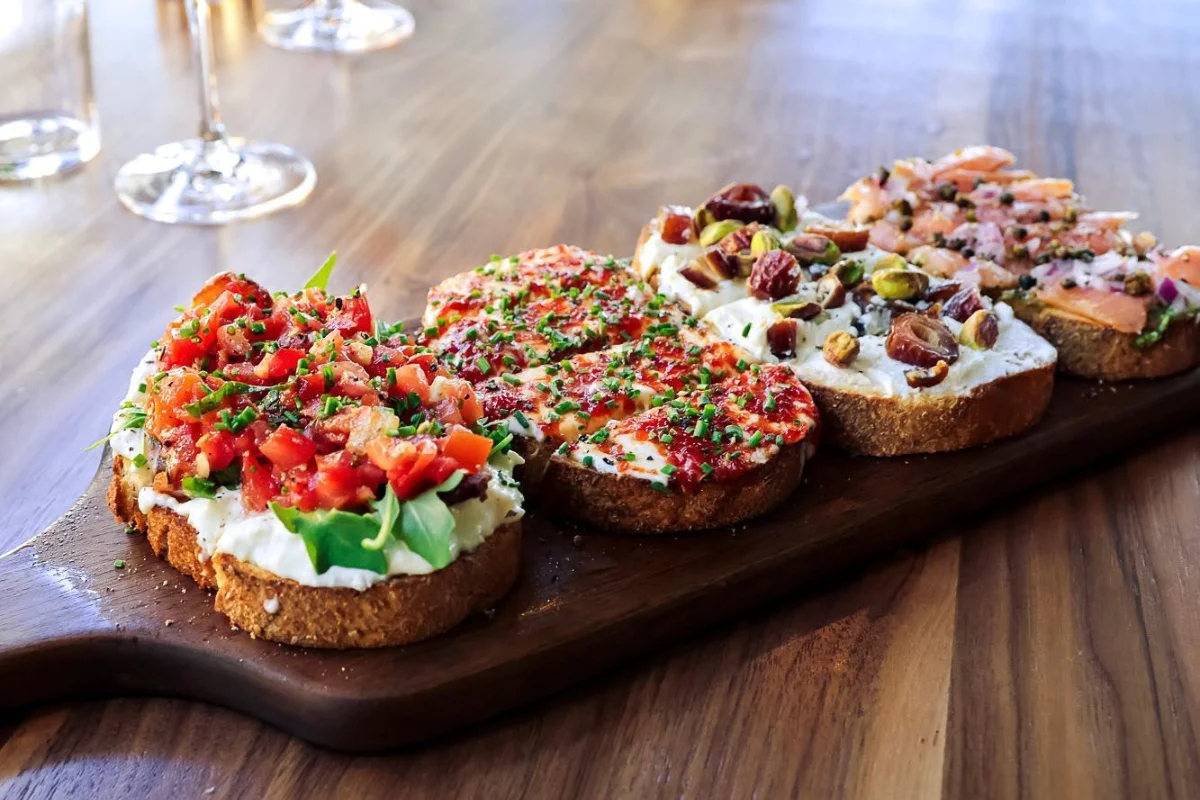
Postino celebrates bruschetta in its many variations, offering guests a build-your-own board option and hosting an annual “Battle of the Bruschetta,” in which customers vote for their favorite limited-time bruschetta, and the winner earns a permanent spot on the menu.
Credit: Postino
The Building Blocks of Bruschetta
New ways to mix up this simple yet elegant classic
It’s believed that the original dates back to 1st century Rome, when fire-roasted bread was served saturated with “olio nuovo,” celebrating the newly pressed olive oil. It was a special-occasion dish consumed in honor of the gods and may have been one of the first culinary applications for olive oil, expanding beyond its sole use as lantern fuel into the specialty ingredient that it is today. Perhaps bread and the olive oil can be said to have come of age together.
The beauty of bruschetta lies in its seasonal adaptability. Chefs are able to easily—and whimsically—reinterpret the dish with freshly harvested, farm-to-bread ingredients that are regionally or even globally inspired. Whipped ricotta, smoked mozzarella or burrata, marinated vegetables, wild mushrooms, cured meats, olives, stone fruits, tinned fish and specialty salts are just a few of the craveable additions and alternatives.
Despite these modern variations, the traditional architecture of bruschetta remains unchanged: a foundation of quality ingredients in perfect unison. Let’s delve into the timeless building blocks of bruschetta while also exploring noteworthy, modern interpretations.
The Bread
The cornerstone of bruschetta is thickly sliced rustic bread. Whether sourdough or sweet bread is used, the slices have crispy edges and a chewy, tender center when properly toasted. Like the perfect nooks and crannies of an English muffin, the toasted surface of the warm bread awakens the aroma of the next component: the garlic infusion. Fresh garlic clove is typically rubbed directly onto the bread’s surface, creating subtle yet savory background notes, rather than being overpowering or spicy.
It is worth noting that the word, “bruschetta,” is tied to its classic preparation; in the Tuscan dialect of Italian, “bruscare” means to roast over hot coals. The contraption used to toast the bread is called a brustolina and is as old-fashioned as it gets. The square, perforated metal grill is placed directly over an open flame or gas stove to evenly diffuse the fire and heat, toasting each slice of bread to the perfect degree of crispiness. Whether employing a brustolina or other technique, grilling is the perfect way to salvage stale bread.
The Olive Oil
A drizzle of high-quality extra-virgin olive oil is an essential part of the bruschetta experience. As the olive oil saturates the toasted bread, it creates an element of cohesion between the earthy notes of the wheat, the umami of the garlic and the sweet acidity of the tomatoes.
Consider extra-virgin olive oil as a raw ingredient that can be used in much the same way as salt, namely enhancing the flavors of other components. And if you’re sticking to the traditional tomato-and-basil toppings, choosing the right olive oil can bring the differentiating “Wow!” factor. With notes of apple, almond and banana, a delicate and buttery arbequiña olive oil from Spain complements the sweetness of fresh tomatoes. Alternatively, a pungent Italian coratina-variety olive oil, with its gassy and artichoke-like flavor, or a picual from Spain, with its bitter tomato leaf notes, plays up the savory side of tomatoes and the earthy basil.
Chef Alexander Ong, who founded and operated Betelnut in San Francisco for two decades and now co-leads the food program for the University of Massachusetts at Amherst, always drizzles koroneiki and athinolia olive oils both on the bread and over the tomatoes, finishing with salt and basil. Ong favors these two Greek olive oils for their robust, pungent and extremely herbaceous flavor profiles and suggests allowing the oil to permeate the bread so that each bite is so saturated with tomato juices and olive oil that “you must enjoy it over the kitchen sink.”
Top It Off
The quintessential tomato and basil toppings can easily be swapped for other ingredients that are local, global or anywhere in between. But ultimately, seasonality should be the most important consideration for this particular element of bruschetta. For instance, Piccola Cucina Casa in Brooklyn, N.Y., is famous for its innovative bruschetta options including the decadent Duetto di Bruschetta, featuring lobster, guacamole, stracciatella, porcini, beef carpaccio and truffles.
Taking bruschetta out of its box as a singular appetizer can be a great way to entice guests and offer them choices. The Bruschetta Board at Postino restaurants, for example, proves that allowing consumers to mix and match toppings—ranging from smoked salmon and Mexican street corn to dates and pistachios—is always a winning strategy.
At its heart, bruschetta is a humble dish pretending to be elegant and this tension can make for compelling compositions. To wit: Chef Nathaniel Malone prefers to pair luxurious toppings such as melty bucheron cheese with foraged ingredients, like seared oyster mushrooms and pickled ramps, that may have been available and accessible to our ancestors.
Beyond foraged ingredients, seasonal, region-specific ingredients can bring a bit of ephemeral magic to bruschetta. Hot summer days are the perfect occasion for enjoying a juice-running-down-your-mouth layer of perfectly ripe, grilled peaches and arugula. Indeed, summertime bruschetta possibilities are especially bountiful and could include any number of versions of eggplant, tomato and herbs, such as chilled French ratatouille or a Sicilian caponata with slices of fior di latte mozzarella.
Last But Not Least
The final layer of bruschetta is actually the first to hit the palate. Not only do these garnishes catch our eyes, they also serve as a preamble for the dish’s overall taste, temperature and texture. Exotic crystal salts have been making waves as an easy-to-use, all-in-one ingredient that boosts taste and adds both textural and visual intrigue. Sprinkle large, pyramid-shaped black charcoal salts from Cyprus over slices of strikingly green zebra tomatoes, or dust Hawaiian pink volcanic salt over fresh farmer cheese. Both add amazing color contrast, as well as minerality and some bonus nutrition.
Aside from fresh-torn basil, one might be inspired to use lesser-known herbs and vegetables for a globally inspired bruschetta build. Barbas de elote (dried corn silk) is a traditional ingredient used in Mexican cuisines and could be placed over slabs of fresh-off-the-cob grilled corn and pico de gallo with torn epazote leaves on a toasted bolillo roll. And for a truly upscale bruschetta experience with international pizzazz, look to Marea in Beverly Hills, Calif., for a slice of garlic bread with housemade burrata and Kaluga caviar.
Bruschetta has certainly come a long way from its humble origins. Not only has it become one of the most iconic appetizers to grace the tables of Italian restaurants, it has also been modernized, elevated and innovated, courtesy of many Michelin-starred establishments the world over. Furthermore, it has joined the ranks of popular dishes that have an entire day dedicated in their honor; National Bruschetta Day falls on March 24, but its menu potential is year-round.
About the Author
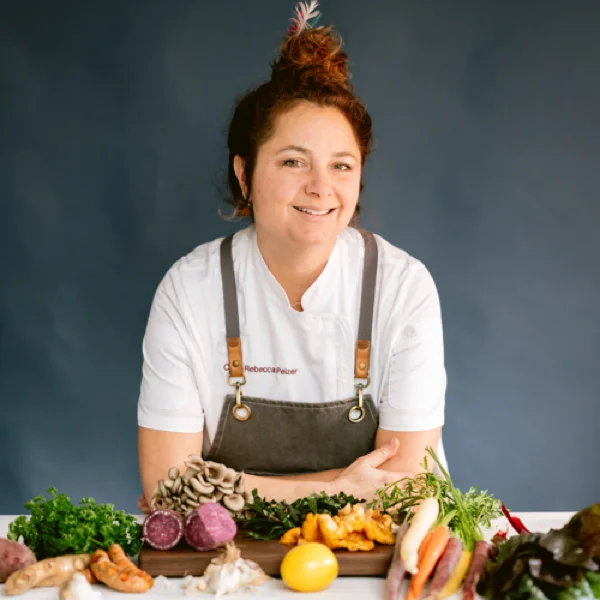 Chef Rebecca Peizer is the owner of the culinary consultancy All Things Culinary LLC, as well as a professor, consulting partner, digital media talent and conference stage manager for the Culinary Institute of America. She has worked for many esteemed wineries, restaurants, resorts and culinary schools in New York, Boulder, Las Vegas and Napa Valley, Calif. She helped implement the nation’s first farm-to-table culinary program and has written culinary job training programs for wellness recovery programs such as the Salvation Army. Rebecca is a certified Olive Oil Sommelier, ProChef II, Certified Executive Chef, cheesemaker, herbalist and forager and can often be found gathering wild food and medicine in Northern California.Click to Read More Stories by Rebecca Peizer

Frozen Asset Labneh enters next-gen soft serve innovation
Flavor Trends, Strategies and Solutions for Menu Development[google_sidebar_ad...

Some Like It Hot Labneh adds global flair to morning menus
Flavor Trends, Strategies and Solutions for Menu Development[google_sidebar_ad...
Signature Touch Labneh elevates the familiar
Flavor Trends, Strategies and Solutions for Menu Development[google_sidebar_ad...
