


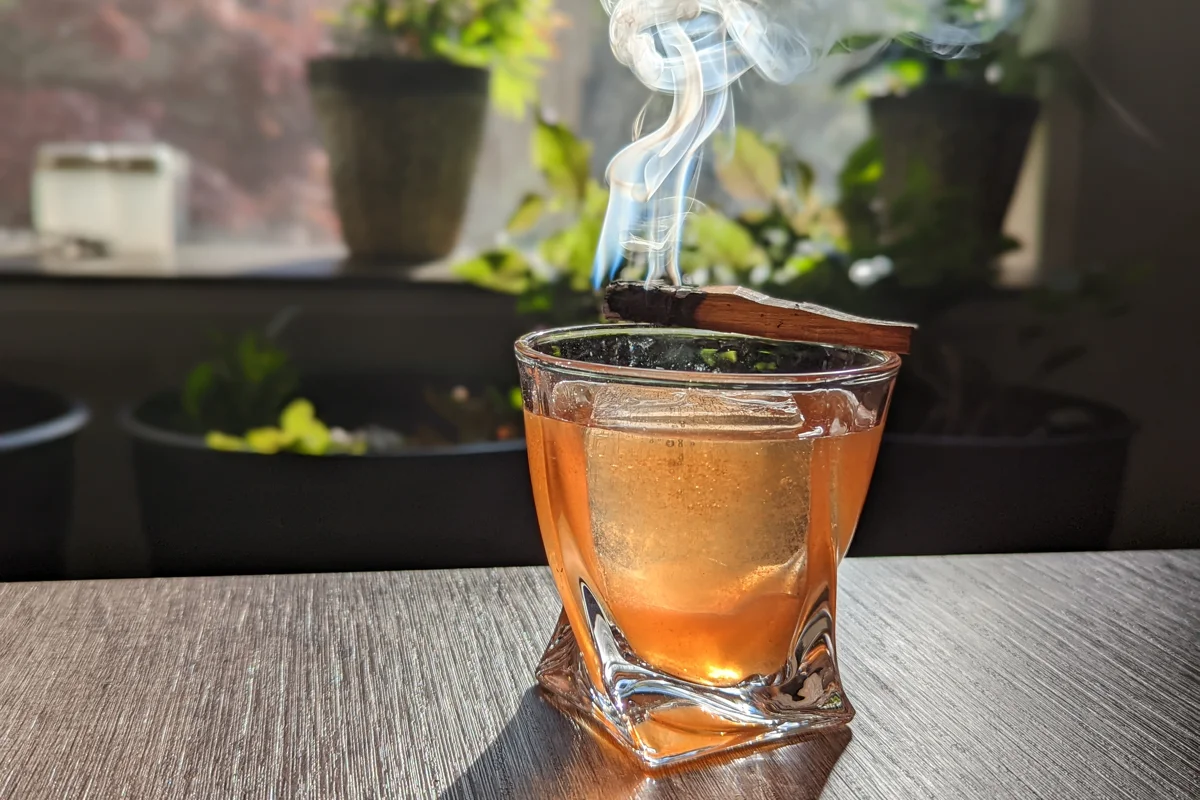
Native to South America, palo santo has long been burned for its singular fragrance and use in spiritual ceremonies, but the woodsy-yet-sweet aroma can also be captured via smoke into a cocktail.
Credit: The Bourbon Bohemian
Where the Wild Drinks Are
Herbs, fungi, roots and more enlivening the beverage space
These spirits are derived in some sense from what is a wild or wild-now-cultivated plant. Now, beverage experts are exploring the origins of these ingredients in their natural states in new and exciting ways.
The rise in interest in wild mushrooms and roots, shoots and leaves in the health and wellness world has made it easy to segue these intriguing ingredients into cocktail programs, coffee drinks and even functional ingredient-infused canned sodas. Coupled with a modern interest in spirituality, wild ingredients have also introduced people to traditional shamanic herbs, spices and barks that are now being used for their effects on all our senses—not only our palate. They are, after all, the original, natural pharmacopeia, or “pharmacy of the people.”
Many botanicals and wildflowers that were once used as old-timey medicines are still in use today—we just call them something else. Instead of a cough elixir, it is now a classic cocktail infused with botanicals just waiting for a fanciful name. After all, drinking medicinal concoctions for what ailed us was the mechanism for how medicine was originally delivered to the human body.
Let’s explore some of the curious and novel flavors, intoxicating aromas, as well as possible health benefits of some wild plants making their way into beverage menus today.
Into the Forest
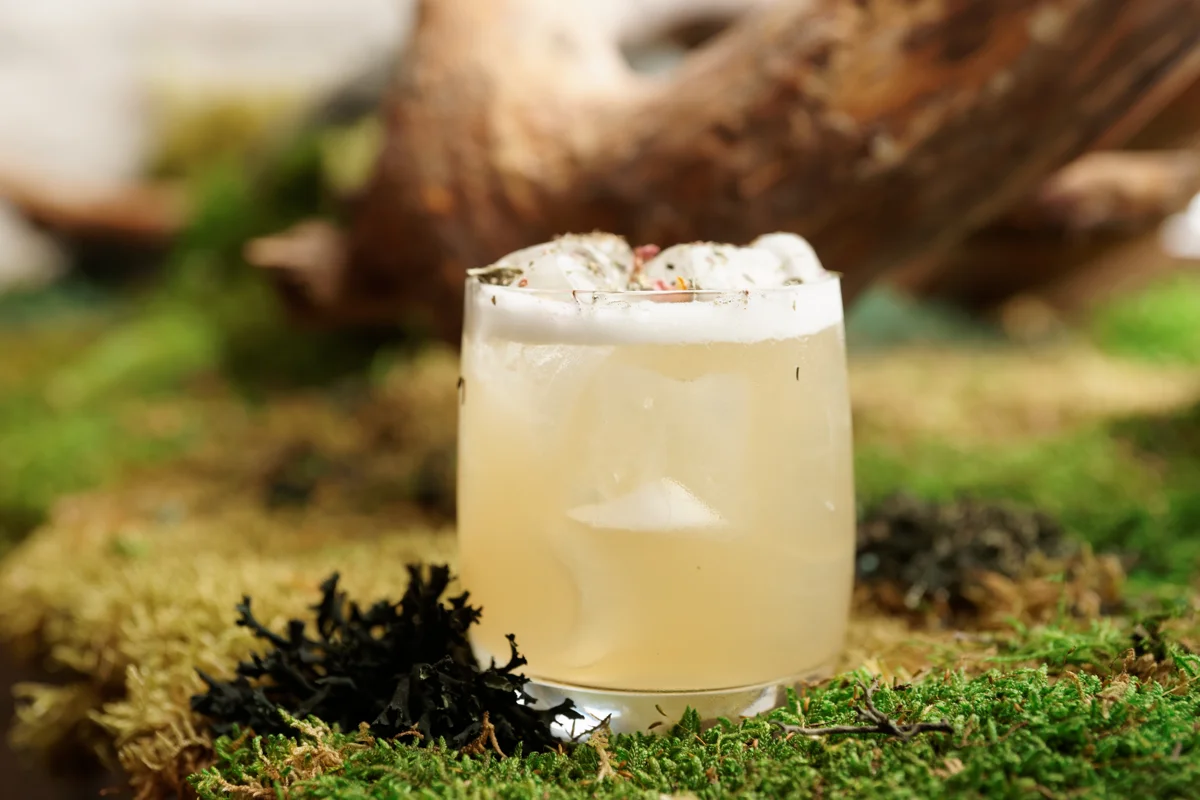
Scandinavian cuisine’s core preservation practices offer a roadmap in transforming seasonal items into flavorful ingredients that can be applied the whole year-round.
A walk in the woods, a breath of fresh mountain air—calming, experiential moments like these are becoming a new facet of beverage craveability. Scandinavian cuisine has often been known for its reliance on mountain forest foods, especially the extremely short-lived, must-gather-now-or-never delicacies that demand perfect timing. Spruce tips, the young, frilly ends of new growth on spruce trees are often harvested and made into a syrup used in food and beverages. This sweetener is bright green, astringent, tart with hints of melon. It’s a great addition to beverages that are paired with savory dishes, such as roasted game meats and poached fish. Or, it provides a bracing contrast to sweet desserts. Spruce tips can be incorporated into teas, cocktails and even used to spike chilled coffee drinks for an extra morning kick to boost energy.
In the same vein, as any mushroom forager will tell you—or keep as a well-guarded secret—the Matsutake mushroom, or pine mushroom, is one of the holy grails of the wild edible world. In just the last five years, mushrooms have exploded in food, beverage and medicinal applications, fueled by their purported health cognitive benefits. While varieties like hen of the woods, lion’s mane and chanterelles have carved out menu real estate, the polysaccharide- and protein-rich Matsutake has remained primarily in the consumable segment—but it could just as easily become a menu star. Take for instance the Matsutake-infused whisky from Bearface that’s distinguished by its additional umami depth. Alternatively, the spicy, cinnamon-like aroma of this elusive mushroom could be infused into Junmai sake and stirred with ice for a Matsu-sake-tini.
Spiritual Awakening
Moving from the natural world to the inner landscape, ingredients with ties to spiritual practices are gaining traction. Many botanical blends have and continue to be used in spiritual cleansing. Take for example, Florida water, also known as eau or eaux de Cologne. Since the 1800s, people all over the world have used this simple blend of flower extracts, citrus, herbs and spices in a variety of rituals—in one of the more modern applications, practitioners put a few drops in their palms, clap three times and inhale the aroma as if it were a bouquet of roses. For a beverage spin, incorporate this special ingredient into a martini wash, rim a glass before dipping in salt or even dilute it for a finishing spritz right before the guest’s eyes.
Similarly, the sacred wood, palo santo, which is native to South American rainforest, is being used to place smoke under a glass dome, allowing cocktails to slowly absorb its fragrance. When the dome is lifted and the smoke is unveiled, it invites the guest to take in its sweet earthy, citrusy and pine-like notes, meant to uplift the mind and body.
Witches Brew
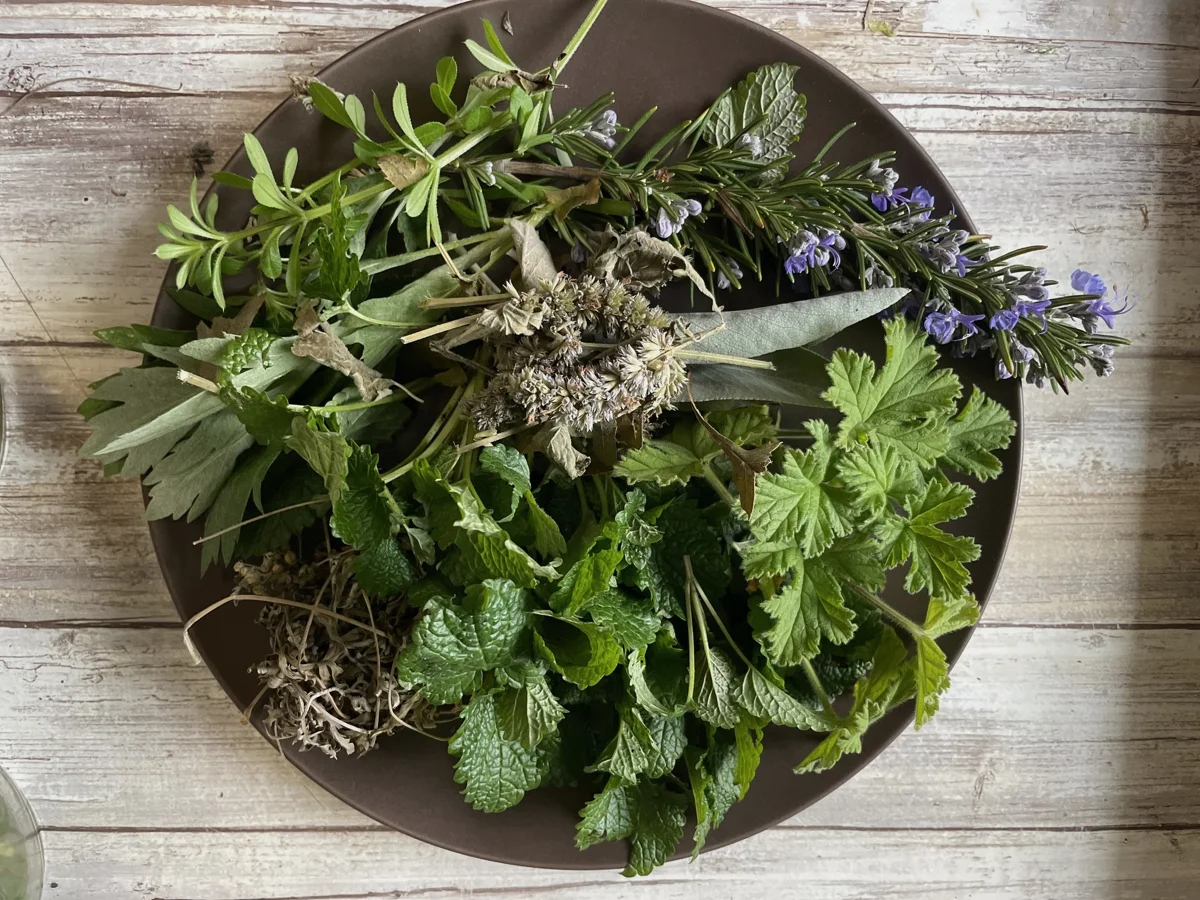 Credit: Rebecca Peizer
 Whether steeped in water, infused in alcohol or heated with vinegar, herbs, roots, berries and other edible plants can bring serious flavor power to the beverage menu.
Infusing herbs in warm water, alcohol or even vinegar is one of the best ways to extract so many of the aromas and favors that make them unique. Some of the most aromatic and powerful herbs elicit calming sensations, with examples being the roots of the numbing, cinnamon-like kava kava, vanilla-scented Valerian, or slippery-sweet licorice root. Just a few years ago, kava bars were considered somewhat taboo, now other calming and even somewhat psychoactive wild and wild-cultivated herbs are making their way into libations to the delight of many consumers, including those who eschew alcohol.
Throughout the ancient world, dream-weaving mugwort was used for protection—it was also purported to be a smoking substitute for sailors when the tobacco ran out. In a modern F&B context, the herb can be used in cooking or infused in vermouth, beer and ginever. Served often as tea, mugwort has a sage-like aroma and is perfect as a bitter component to a sweetened soda. It can also be paired with citrus for an herbal take on a tequila-based drink.
The ancestor-invoking aroma of cedar is also finding its place in liquid libations. Cedar is sophisticated, cooling and perfect for making soda on its own or to mix with gin. The new spring cocktail, Cedar in the Pines, at Merchant & Trade in Charlotte, N.C., uses cedar-infused bitters, in which aromatic tinctures are blended together for the perfect essence of standing in the middle of a pine forest.
Got Guts?
On the wilder side of fermented food and beverages is Eastern European fermented kvass, a second cousin of kombucha. Dubbed “fermented bread water,” this thousand-year-old beverage is made from old rye bread that’s undergone lactic fermentation, like pickles and sauerkraut. It is a fabulously gut-healthy, low-alcohol beverage that can be infused with lemon peel, dried fruits, mint and other herbs and spices either during the fermentation process or afterward, when it’s best served shaken and on the rocks with a twist.
Shrubs, made with vinegar and fruit are easy to incorporate into any beverage program because they appeal to consumers of all ages. They lend themselves to extreme versatility and are a great way to introduce wild ingredients to newcomers. The explosive color and benefits of sea buckthorn, also known as miracle berry, has been making waves lately in cosmetic applications to rejuvenate skin. But the fruit of this plant is also delicious and highly nutritious, lending itself very well to maceration and fermentation. Use it in place of tea for kombucha or combine it with apple cider vinegar for a beautifully bright orange shrub. Sea buckthorn withstands even the coldest of temperatures and poorest of soils, which tells you a little bit about how packed it is with good things for the body. Add sparkling water and you can menu it as a “Miracle Dew” energy drink.
Researchers estimate there could be as many as 300,000 edible species of plants in the world, though the amount modern consumers eat on a regular basis are probably closer to the low hundreds. But as guests become more interested in lesser known ingredients—whether driven by culinary curiosity, functional benefits or even spiritual correlations—the F&B world is well situated as a guide and curator. The beverage sector in particular is ripe with opportunities to explore exciting additions that are not only tried-and-true from ancient traditions but also speaks to what is local, sustainable, healthy, intriguing—and even a little wild and crazy.
About the Author
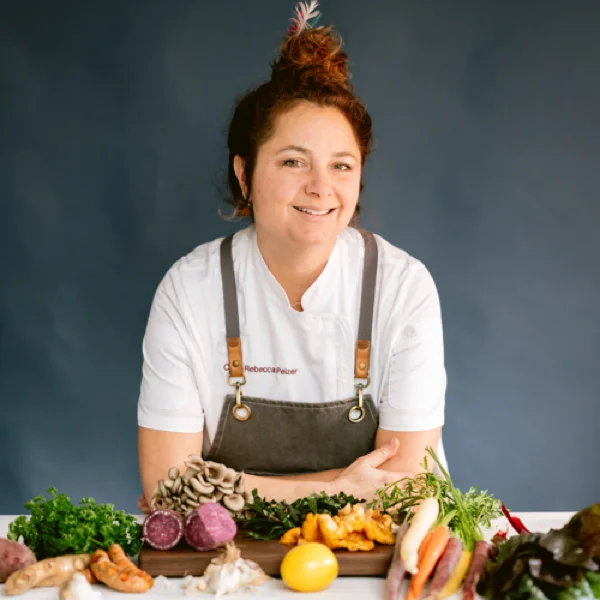 Chef Rebecca Peizer is the owner of the culinary consultancy All Things Culinary LLC, as well as a professor, consulting partner, digital media talent and conference stage manager for the Culinary Institute of America. She has worked for many esteemed wineries, restaurants, resorts and culinary schools in New York, Boulder, Las Vegas and Napa Valley, Calif. She helped implement the nation’s first farm-to-table culinary program and has written culinary job training programs for wellness recovery programs such as the Salvation Army. Rebecca is a certified Olive Oil Sommelier, ProChef II, Certified Executive Chef, cheesemaker, herbalist and forager and can often be found gathering wild food and medicine in Northern California.Click to Read More Stories by Rebecca Peizer
The New Sauce Economy: How Flavor Drives Chicken Innovation Sauces, dips and drizzles are becoming the fastest path to menu differentiation
Flavor Trends, Strategies and Solutions for Menu DevelopmentA...

Chimichurri Makes Its Move Menu concepts from Kitchen Collaborative 2026 showcase expanded potential for the herbaceous Latin American sauce
Flavor Trends, Strategies and Solutions for Menu Development[google_sidebar_ad adslug="2026-08-Surrounds-SupHerb-320x50"...
Best of Flavor 2026 Our Best of Flavor issue brings together 101 standout menu concepts, reflecting the creativity shaping today’s menus
Flavor Trends, Strategies and Solutions for Menu DevelopmentHERO CAPTION HERE, HERE AND HERE HERO...
