


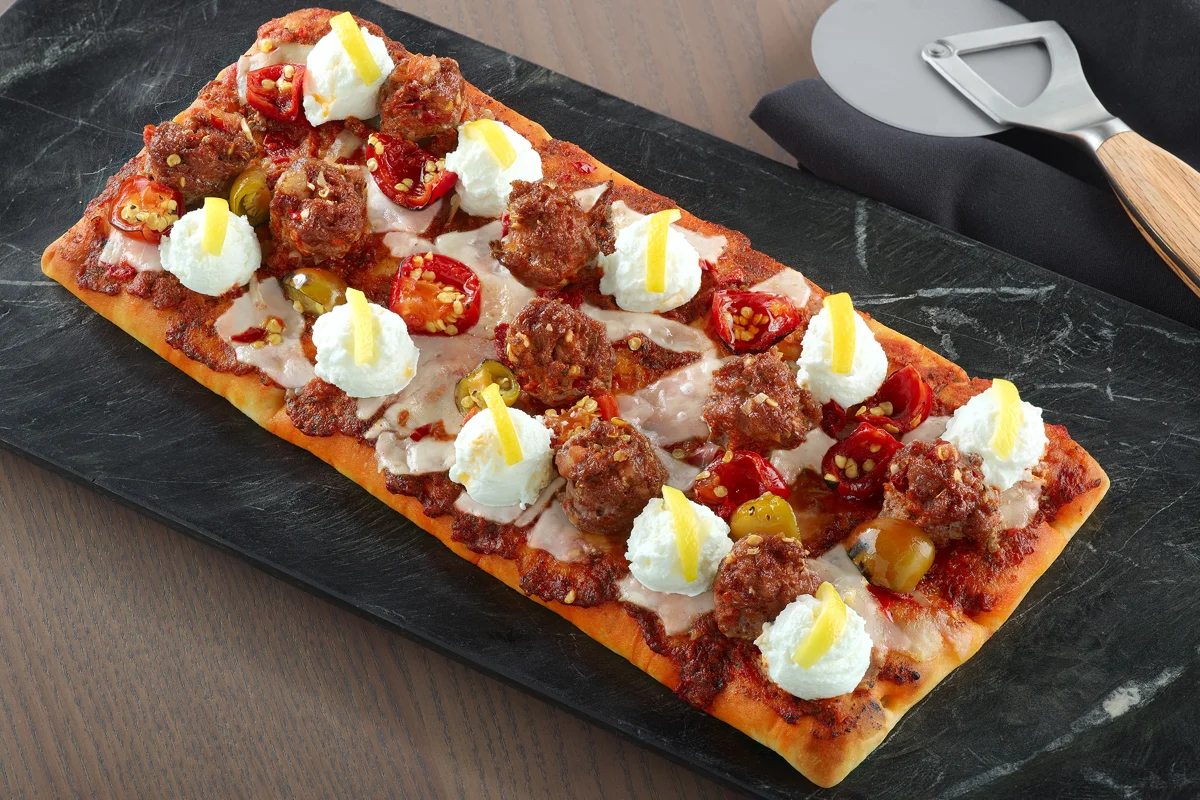
This Hearth-Fired Harissa & ‘Nduja Meatball Flatbread elevates two menu stalwarts—pizza and meatballs—to a premium flavor experience.
Credit: otysonphoto.com
KC Flavor Champion: Nate Weir
Play it forward in menu innovation that prizes flavor complements and contrasts
 “There’s almost a built-in permission for chefs to play,” says Nate Weir, director of culinary, Teriyaki Madness. He’s speaking specifically of the flexible canvas that flatbreads offer for culinary innovations that are both bold and approachable. But he may as well have been referencing Kitchen Collaborative, the menu ideation program launched by Summit F&B and Flavor & The Menu in 2020. “Getting the creative juices flowing with Kitchen Collaborative inspired me to come up with some fun ideas for our own brand,” he reports.
But back to flatbread—the foundation of Weir’s winning concept, Hearth-Fired Harissa & ‘Nduja Meatball Flatbread, selected by sponsor Thomas Foods. “Flatbreads have become such a popular format because you can take them in almost any culinary direction without asking the guest to make too big of a leap,” he says. “You can play with everything, layering contrasting textures and flavors into a really complete bite.”
Weir headed off in the direction of “those trending, punchy Mediterranean spicy flavors that are everywhere right now.” There were a few sponsor products that sparked inspiration, including Moroccan Harissa paste from SupHerb Farms, Sharp Provolone from BelGioioso and, of course, Flatbread from Damascus Bakeries. But it was his transformation of Ground Lamb from Thomas Foods into housemade, ‘ndjua-inspired meatballs that really upped the ante.The chef infused the coarse ground lamb with crushed Calabrian chiles, minced pancetta, garlic and smoked paprika to evoke the flavor of ‘nduja. “I wanted to get that specific spicy, savory, fatty hit that would stand up to the harissa,” he says. “’Nduja is such a fun ingredient. It felt like a natural bridge between the Moroccan harissa, the Italian elements in the dish and the clean, fresh flavor of the ground lamb.” Although it’s traditionally made with pork, Weir was confident that the other components would make his lamb-based version especially compelling.
I relish the chance to engage in pure, blue-sky innovation. As the chef for a national brand, innovation is a key part of the job, but there are always some defined constraints, whether menu, ingredients or equipment stack—we’d never do a Mediterranean-inspired flatbread at our teriyaki chicken concept. Kitchen Collaborative is a fun, personal challenge to stretch creatively.
—Nate Weir
In addition to the sponsor kit products, Weir’s concept makes good use of crushed San Marzano tomatoes, charred pickled peppers, aged Italian Piave (cooked curd cheese), preserved Meyer lemon whipped ricotta and a fruity, spicy Calabrian chile oil.
“What I liked most about the final bite was that it delivered a lot of intensity without becoming one note,” he recounts. “The harissa, Calabrian chile and ‘nduja-style meatball bring layers of heat and savory depth, while the pickled peppers add a high-acid pop and the whipped ricotta cools everything down. Then, the preserved Meyer lemon gives it a punchy citrus lift that wakes it up. The flatbread stood up to all of that, so you get spice, richness, acidity and freshness in each bite. Honestly, I ate this flatbread for dinner three nights in a row.”
Weir’s background as a chef has exposed him to a wide variety of cooking styles and cuisines. “When I cook creatively, I’m just looking for flavor concepts that work well together. I feel this concept nailed that approach. There’s a common thread that runs through it—flavorful, chile-based spices—brought together in an unexpected but delicious way.”
WHY THIS PLATE PREVAILED
When judging Kitchen Collaborative entries, Dom Zirilli, corporate executive chef at Thomas Foods, found that Weir’s flavor-forward flatbread stood out from the competition for several reasons, including operational ease, on-trend ingredients and overall guest craveability. In particular, “I loved the idea of elevating not just one consumer favorite, but two: pizza and meatballs,” says Zirilli. “It delivers such an approachable, but elevated eating experience.”
Zirilli calls Weir’s inventive use of the company’s pasture-raised Ground Lamb “genius.” Melding it with harissa pulls in bright, aromatic North African flavors, while the ‘nduja brings a richer, Italian-style heat, producing an unexpected flavor combination, he says. “And although the execution presents itself as simple—being pizza—the combination of ingredients and flavor profiles is extremely complex.”
The dish also elevates ground lamb to “a premium experience,” says Zirilli. “With rising operational costs and inflation on red meat, it was very operationally savvy to use ground lamb. It’s overall lamb-tastic!”
MOMENTS OF INTERACTION
“I was thrilled to be selected as a winner for this dish,” says Weir. “This flatbread was the very first concept I worked on for the Kitchen Collaborative challenge. Sometimes, that first ‘trust your gut’ idea is the best one.”
In November, he will join other 2026 winners on a culinary expedition to Mendoza, Argentina, led by Flavor & The Menu and Summit F&B. For Weir, this will be a return after a visit a decade prior that focused on the wineries of the region. “It ended up being one of my favorite international trips,” he credits. “I found the blend of South American and European cultures so fun.”
This time, Weir is not only eager to visit Buenos Aires for the first time, but to also spend time “with a great group of chef peers doing chef-y things,” he says. “One thing I like most about this industry is the community that exists among chefs. For being such a driven—and often competitive—group, we’re also really collaborative and supportive of one another.” The expedition will be a great place to “talk shop, commiserate and come away inspired. There’s always something new to explore, some way to get better. If you ever find yourself stagnating as a chef, you are doing something wrong!”
MORE INSPIRED TAKES
For most Kitchen Collaborative chefs, participation in the menu ideation challenge is an introduction to new products. For Weir, it’s also an opportunity to use these while exploring and experimenting with new culinary techniques. From frying lentils to using a cheese sauce to marinate steak, here are two concepts that showcase the success of his flavor play.
Watermelon “Maguro” with Lemongrass Chili Eggplant and Fried Lentil Furikake
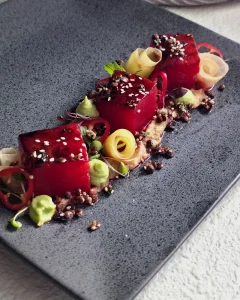 Weir credits his tenure at Teriyaki Madness with the early direction for this dish, which starts with beet-teriyaki-cured watermelon. “Working with teriyaki every day has taught me to think beyond simply using it as a finishing sauce. It can also function as a marinade, seasoning and source of umami,” he explains. “That made me curious about whether I could use it to push watermelon in a completely savory direction.” He set about trying to recreate a tuna tataki.
Weir’s ongoing interest in pan-Asian flavors has its imprint all over this dish, which not only includes sponsor Kikkoman’s Teriyaki Marinade, but its Teriyaki Baste & Glaze with Honey & Pineapple. It also features yuzu kosho-whipped avocado, a chili crisp-honey-green lentil furikake (made with products from fellow sponsors Lentils.org and Lee Kum Kee) and lemongrass-chili eggplant purée (featuring a second sauce from Lee Kum Kee).
The Kikkoman sauces were “absolutely key to transforming the watermelon in an unexpected direction. The flavors are spot-on authentic,” he says. The teriyaki marinade brought the umami to the beet juice-cured and compressed watermelon saku, while the glaze delivered “that signature seared tuna look—and a big hit of flavor after searing it in the pan.”
But Weir wanted to push his tuna swap further. “The beets initially served a very practical purpose: They gave the watermelon the deep red color for the visual character of tuna. But the earthy sweetness ended up working naturally well with the fruit and the teriyaki,” he says of his successful experiment.
To dial up the elegance of this vegan entrée or starter, he paired the watermelon with a rich, silky eggplant purée as a savory, textural element that would add to the drama of the presentation. Other components include crispy lentils and “gorgeous” watermelon rind “sushi rosettes” cured in a mix of ginger and rice wine vinegar.
“But I wanted more heat to keep the dish savory and complex and add more color. Avocado would bring the rich fat a dish like this needed, but it would have been a little too ‘quiet.’” Weir turned to an ingredient he is “obsessed with”: yuzu kosho. “It brought salt, chile and a bright citrus edge, which helped the avocado cut through the sweeter elements on the plate but still feel connected to the rest of the dish.”
This was Weir’s first experience with the Lee Kum Kee-sponsored products: Chili Crisp Hot Honey Sauce and Lemongrass Chili Flavored Hoisin Sauce. “I especially loved the floral/citrus and spice notes in the hoisin. They really elevate the classic flavor while cutting through the sweetness. I used it with some simple, oven-roasted eggplant, which allowed the hoisin flavor to star.”
Frying whole lentils was another new approach, reports Weir of a technique suggested by the sponsor. “That took me a while to figure out,” he concedes. “The challenge was getting them fully crisp without becoming hard or greasy. It took about eight batches before I landed on a technique that I liked. Tossing them with the hot honey chili crisp while they were still warm created a light glaze, and adding the furikake after they cooled helped preserve the crunch. I was really thrilled with how all the different ingredients came together into a beautiful, complex plate.”
Asado Pasta
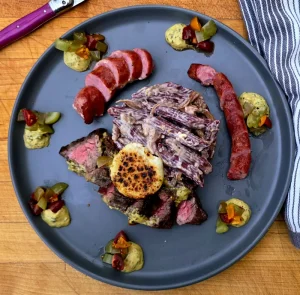 Weir clearly had his eyes on the Kitchen Collaborative grand prize when developing this concept. “I thought it would be really fun to play with the quintessential Argentinian asado, reinterpreting it as an elevated pasta dish,” he says, citing the Creamy Fire Chimichurri Sauce from Good Foods as “the spark.” I also pulled in various flavors that reminded me of my last visit to Argentina, including Malbec, chorizo and a great flame-grilled steak. There was plenty of Argentinian inspiration enhanced by several sponsor products.
The resulting dish features skirt steak and two varieties of Argentinian chorizo all marinated in the chimichurri; Al Bronzo Penne from sponsor Barilla for Professionals infused with Malbec and dressed in a rich cream sauce that incorporates Caramelized Onion Gruyère Spread from Good Foods; and a quick-pickled cotton candy grape and heirloom cherry tomato relish. It’s finished with a torched round of BelGioioso Sharp Provolone on top of the steak, mimicking a classic provoleta.
With the Good Foods chimichurri as the jumping-off point for this concept, Weir used it as a straight sauce but also wanted to push the envelope a bit. “I’d used mayonnaise as a steak marinade before, and so I wanted to try that technique with this sauce and, wow—it worked better than I imagined. The steak developed a deeply flavorful crust and stayed super moist.”
Using both the skirt steak and the chorizo allowed Weir to present two different sides of the asado experience. “The steak brings the char, texture and straightforward beef flavor, while the chorizo contributes spice, richness and a more seasoned, savory element,” he explains. “Together they make the Argentinian identity of the dish much clearer than either one would do on its own. But I was probably still short by about four meats!”
The onion-cheese sauce performed unexpectedly well when combined with reduced heavy cream and a splash of the pasta cooking water. “It became a super-flavorful, rich, beautiful béchamel that is made to order, easy to make and gluten free,” he credits. “This would be a great ‘secret weapon’ as a pantry ingredient, not only used as is, but to transform sauces, aïolis and even marinades.”
Weir was particularly tickled by the visual effect of the Malbec-infused penne. Having toured several wineries during his last visit to Argentina, “Malbec was always going to find its way into the dish somehow,” he recounts. “But rather than take the obvious route with a wine sauce, I thought that using it to stain the pasta would be a fun surprise. I love how it turned out, adding a rich and unexpected purple color to the finished plate. It referenced Argentina in a way that felt playful but still purposeful.”
In the end, the chef is well pleased with his restaurant-ready dish. “It came together quickly, has unique but recognizable flavors and great plate presence,” Weir says. “Plus a speed-scratch ‘béchamel’ is really ops-friendly.”
Flavor & The Menu has two more winner profiles lined up to round out 2026. Look for these in the coming weeks.
Kitchen Collaborative Project Management: Summit F&B
Hearth-Fired Harissa & ‘Nduja Meatball Flatbreadphoto: Photography: otysonphoto.com // Food Styling: Peg Blackley
About the Author
 Patricia Fitzgerald serves different roles on the Flavor & The Menu team, including writing custom content, Kitchen Collaborative chef spotlights and digital editorial content, as well as acting as a contributing editor for the print magazine. As owner of PFitzCommunications, she specializes in various areas of foodservice and hospitality, while also maintaining clients in other industries and professions. She can be reached at [email protected].Click to Read More Stories by Patricia Fitzgerald
Flavor Trailblazer: Gabe Caliendo Pairing scratch-made comfort with global discovery at Lazy Dog
Flavor Trends, Strategies and Solutions for Menu Development[google_sidebar_ad...

Across the Globe for Cream Soda Inspo Plus personal ties closer to home
Flavor Trends, Strategies and Solutions for Menu Development[google_sidebar_ad adslug="2026-10-Surround-CMAB-320x50"...
The British Pub Invasion Bringing fresh enthusiasm to an overlooked global cuisine
Flavor Trends, Strategies and Solutions for Menu Development[google_sidebar_ad adslug="2026-10-Surround-McCain-320x50"...
