
Credit: Wonho Frank Lee
From Subtle to Sublime: Sorbet’s Flavor Evolution
Bold flavors and presentations abound in this overlooked category
The chef appreciates the purity and diversity of what’s historically been considered a watery, ice-y and basic dessert option. But now, operators like Kim are getting creative with sorbet—incorporating unexpected ingredients, adding colorful quenelles to composed desserts and upping the mouthfeel with olive oil and more.
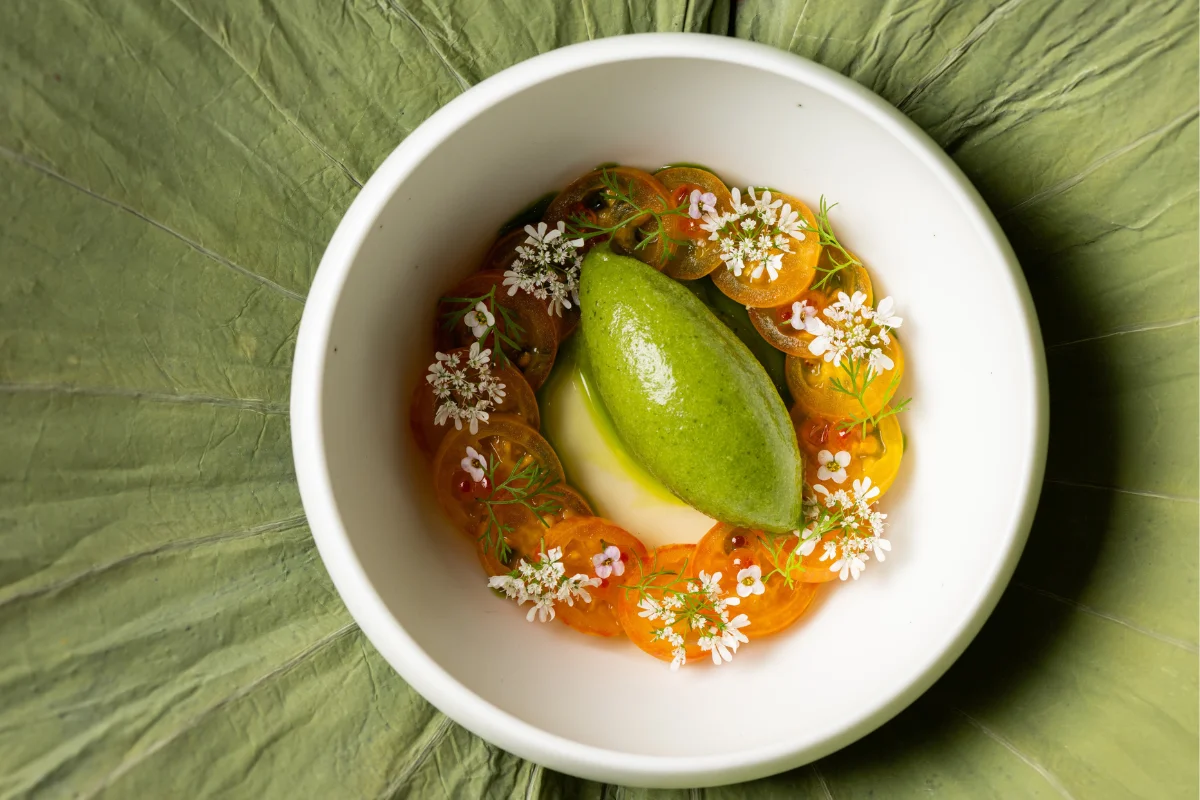
In Restaurant Ki’s 12-course tasting menu, the chef has worked ingredients like perilla leaf and omija berries into sorbet. The herbaceous mintiness of perilla leaf was the perfect contrast for a tomato-and-burrata course that he says was loosely based on a Caprese salad. “Instead of using a traditional dressing, we wanted to use the sorbet,” Kim says of the dessert, which includes smoked tomatoes, a burrata “gel,” cilantro flowers and a perilla leaf sorbet made with lemongrass, ginger, basil and lemon juice to balance the flavor and prevent it from turning brown. He tempers the sorbet so it’s not too icy, and when plated on the dish, “it coats the tomato and everything else on the dish rather than people having to chew a cold sorbet,” Kim explains.
While the perilla leaf sorbet is a striking green, Ki describes his omija berry sorbet as Barbie pink. “It almost looks artificial, but that’s the natural color of the berry,” he says of the ingredient native to Korea that means “five-flavor berry,” specifically sweet, sour, spicy, bitter and salty. The berries are often brewed with sugar to make a sweet-and-sour punch, but Kim uses the dehydrated ones he gets from a Korean pharmacy for the bright pink, multi-flavored sorbet to top a glazed strawberry mousse cake with candied pine nuts.
Whitney McMahan, pastry chef of Texas-based Uchi, is also a believer in using sorbet to add color, curiosity and mouthfeel to desserts. While sorbet used to show up simply as a trio at Uchi, it’s now the non-dairy base of sundaes or a balancing component to a dessert. “Instead of leaning into creating a creamy mouthfeel, we’re looking for something that breaks up the fat-forward components of a dessert,” she says. An ube cheesecake with white chocolate and feuilletine crust is balanced with a blueberry yogurt sorbet, while the coconut tapioca comes with pickled blueberries, hazelnuts and lychee sorbet.
 Credit: Hai Hospitality
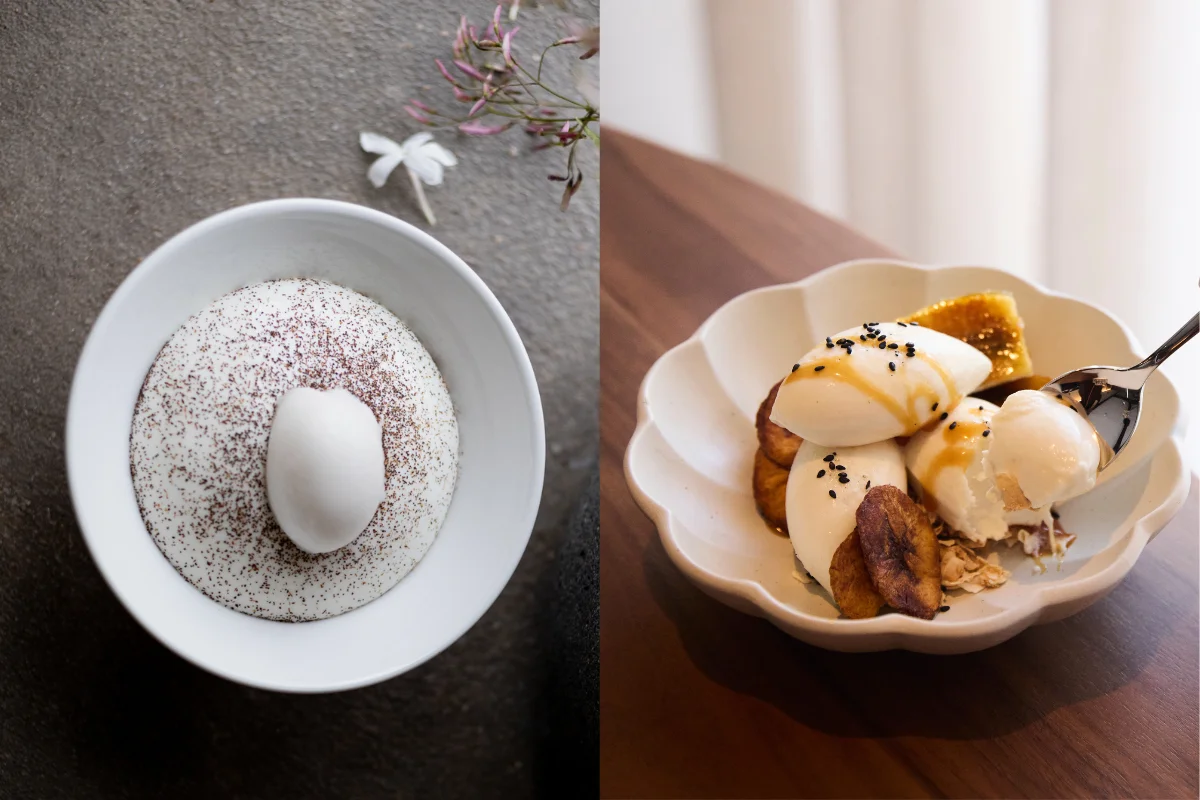
 Uchi deftly proves sorbet’s potential as part of a layered, composed dessert; lychee sorbet lightens up coconut tapioca (left), while banana sorbet brings a smooth, cooling dimension to a caramel-clad sundae.
The light and fresh sorbet sundaes include banana-coconut, with banana sorbet, torched bananas, candied coconut, coconut caramel, crispy plantains and black sesame salt; strawberry swirled with herbs and topped with fresh fruit and housemade pop rocks; mango and passionfruit with condensed coconut milk; and soursop with mango sauce and candied coconut and cacao nibs.
“We play with the regions where the restaurants are located, so at our Miami location, we tend to go with more tropical flavors because they appeal to the clientele. Soursop sorbet isn’t something we can put everywhere because not everyone’s as familiar or comfortable with it, but we highlighted it with pineapple and guava to create this complex, very tropical flavor profile, while still giving guests a luxurious experience,” she says.
45c is still pretty warm- to fully activate our stabilizers, we heat sorbet bases to 85c, and then to add olive oil, we cool to 45c, and then emulsify the olive oil in! While it’s still on the warm side, it’s the right mix of warm & cool to make that emulsion!
McMahan is also experimenting with emulsifying olive oil into a sorbet base for added mouthfeel. Timing is crucial in this process; bases are typically heated to 85 degrees Celsius (185 degrees Fahrenheit) but that’s too warm for the oil. “If you add it while it’s too hot or wait until it’s too cold, then it doesn’t bind quite as well, and it gets a little bit of greasiness. But there’s this perfect temperature of 45°C where you get a really nice emulsion that holds up to create the creamy mouthfeel.” She says it adds heft to lemon-based sorbets. “That’s what’s cool about the technology behind sorbets is we can create something that has the feeling and texture of something that’s not plant-based, but keep it vegan so it’s friendly to as many people as possible.”
The 20-year-old D.C.-based Pitango Gelato has eight locations and, despite the name, offers 10 sorbets along with its gelato options. “Gelato means ‘frozen’ in Italian so in Italy, it’s common to have sorbet on the menu,” says Alisa Dan, associate director of marketing and sales. “We’ve prioritized sorbets, and it’s always been a winner, even before being vegan was cool.”
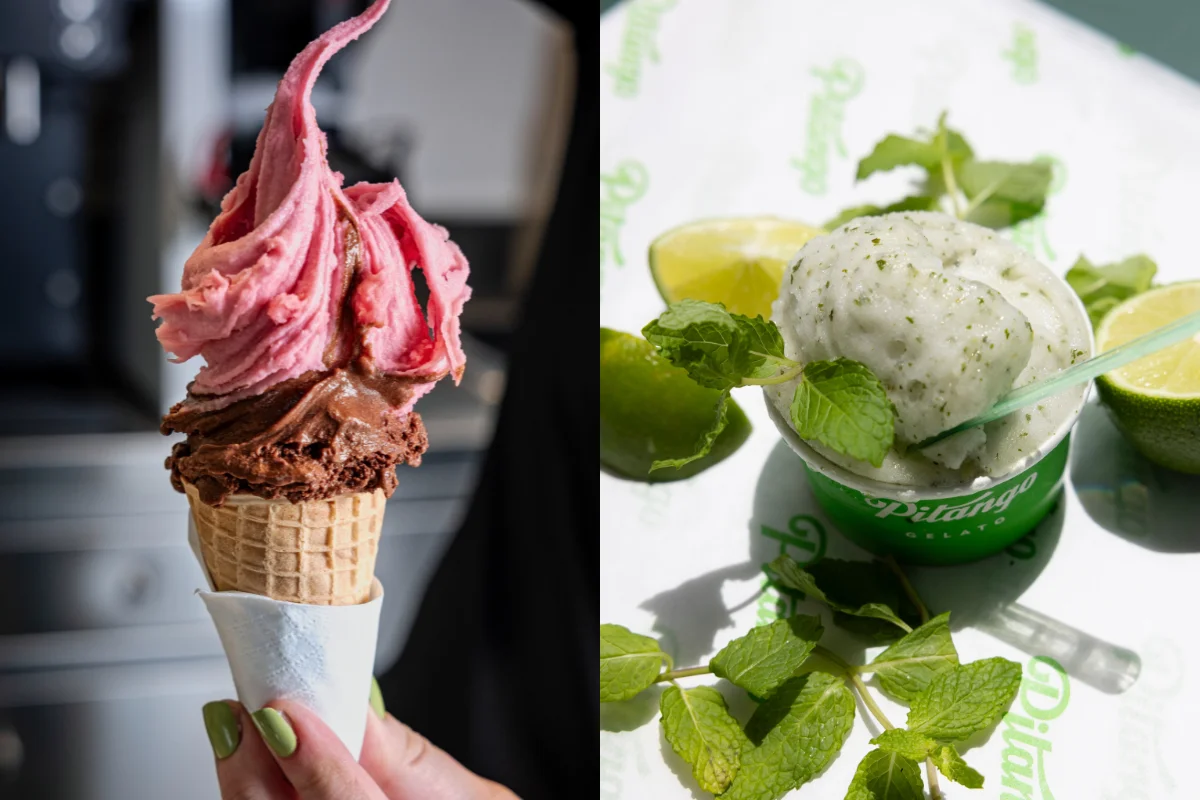
Pitango only uses raw fruits—not fruit jams—in its sorbets, which range from lychee to sour cherry to cantaloupe. “When people taste our mango sorbet, they say, ‘this really tastes like mango,’ and it’s because all we really use are mango, water and sugar,” she adds. Using smaller Champagne mangoes from Mexico also makes a difference. “They have a really velvety texture and when you whip them into a sorbet, they’re buttery,” Dan says. For non-fruit sorbets, Pitango’s process varies from the whole-fruit flavors but still maintains its whole-ingredient ethos—the hibiscus flavor is made by steeping hibiscus in water and the chocolate sorbet leverages a base of 100 percent single-origin chocolate from Italian producer Domori Chocolate.
Some of the most interesting applications have been collaborations with local bars and breweries. Last summer, the brand partnered with D.C. cocktail bar Jane Jane to create alcoholic affogatos, including a blood orange sorbet topped with a Monkey Gland cocktail from the 1920s (gin, orange juice, grenadine and absinthe). Pitango also worked with Aslin Beer Co. on boozy mash-ups like raspberry sorbet and Volcano Sauce sour ale. “Frozen cocktails have been around for decades, so sorbet mixed with alcohol is just a different lens for us to create a really interesting tasty drink/bite,” Dan says.
 Credit: Scott Suchman | Jenn Chase
 Pure, whole ingredients guide Pitango’s sorbet innovation, which includes familiar favorites as well as less common varieties like hibiscus and dark chocolate (left) and mojito (right).
A native of Costa Rica, Yudith Bustos Taleno, executive pastry chef of the Four Seasons Chicago, grew up with tropical fruit at her fingertips. “Vendors would come through the streets with fresh passionfruit and mango. And if you wanted coconut, you’d go to the patio and grab it,” she says. Over the course of her career, she’s cooked at Michelin-starred restaurants in Paris and London, as well as other Four Seasons properties in Dallas, Scottsdale, Ariz., and Washington, D.C. None of these locations are known for tropical fruits, which for Taleno, was all the more reason to feature mango, pineapple and passionfruit in bright and cheerful sorbets. In addition to these flavors, she’s also made lychee and hibiscus sorbets, as well as a strawberry-elderflower for a strawberry pavlova, all with lower sugar. “Especially now when everybody is taking better care of themselves, it’s important to also change things a little bit, so I cut the sugar to make the sorbet have a nice texture, but lighter,” she says.
As much as her past inspires her desserts, she also likes to instill a sense of place for the property. In Chicago, that meant putting her twist on a brownie, which was invented in 1893 at the Palmer House Hilton. The version she’s working on for a new menu features a warm skillet brownie topped with salted caramel popcorn tuile and buttermilk sorbet (which is technically more of a sherbet), made with buttermilk, water, sugar, glucose, lemon juice and zest, salt and butter. “I want something that will be nice and light for a brownie. And why a brownie? Because we are in Chicago.”
Also in Chicago, fine-dining, Michelin-starred Esmé brings tropical flavors to the menu, courtesy of its chef de cuisine, Gustavo Mejia, who hails from Honduras. “We’ve made many different sorbets, including fennel and lemon verbena, but some of my favorites will always be those really tropical flavors, like guava and passionfruit. This is mainly because I grew up surrounded by coconuts, oranges, cacaos and fruits,” he says. Guava is the star of a sorbet that tops a stunning coconut sponge cake with sesame brittle and passionfruit gelée: “Guava has such a unique flavor and aroma that it’s fun to play with,” he says. “Whether it’s a purée, juice or sorbet, it stands out.”
A little more hidden is his passionfruit sorbet, served with orange meringue and nasturtium. It shows up in a pre-dessert (or palate cleanser) that’s presented on a custom plate featuring a printed image of Frida Kahlo in rice paper that has been sugar-glazed. “The plate arrives and for a second or two guests try to make sense of what they’re seeing,” Mejia says. “We instruct them to literally break the art to find their sorbet hidden inside.”
About the Author
 Liz Grossman is the former editor-in-chief of Plate, the award-winning magazine that served the professional chef industry. As co-founder of the nonprofit storytelling series Between Bites, she is passionate about live storytelling and giving back to Chicago’s food community. Liz has moderated and spoken on panels for FAB, Mise, Niman Ranch, Worlds of Flavor and PlateTalks. She currently writes Chicago’s Hit List for Resy and contributes to Chicago magazine, Foodservice Director and Restaurant Development + Design. Follow her on Instagram at @elizabites_ChiClick to Read More Stories by Liz Grossman
The New Sauce Economy: How Flavor Drives Chicken Innovation Sauces, dips and drizzles are becoming the fastest path to menu differentiation
Flavor Trends, Strategies and Solutions for Menu DevelopmentA...

Chimichurri Makes Its Move Menu concepts from Kitchen Collaborative 2026 showcase expanded potential for the herbaceous Latin American sauce
Flavor Trends, Strategies and Solutions for Menu Development[google_sidebar_ad adslug="2026-08-Surrounds-SupHerb-320x50"...
Best of Flavor 2026 Our Best of Flavor issue brings together 101 standout menu concepts, reflecting the creativity shaping today’s menus
Flavor Trends, Strategies and Solutions for Menu DevelopmentHERO CAPTION HERE, HERE AND HERE HERO...
