


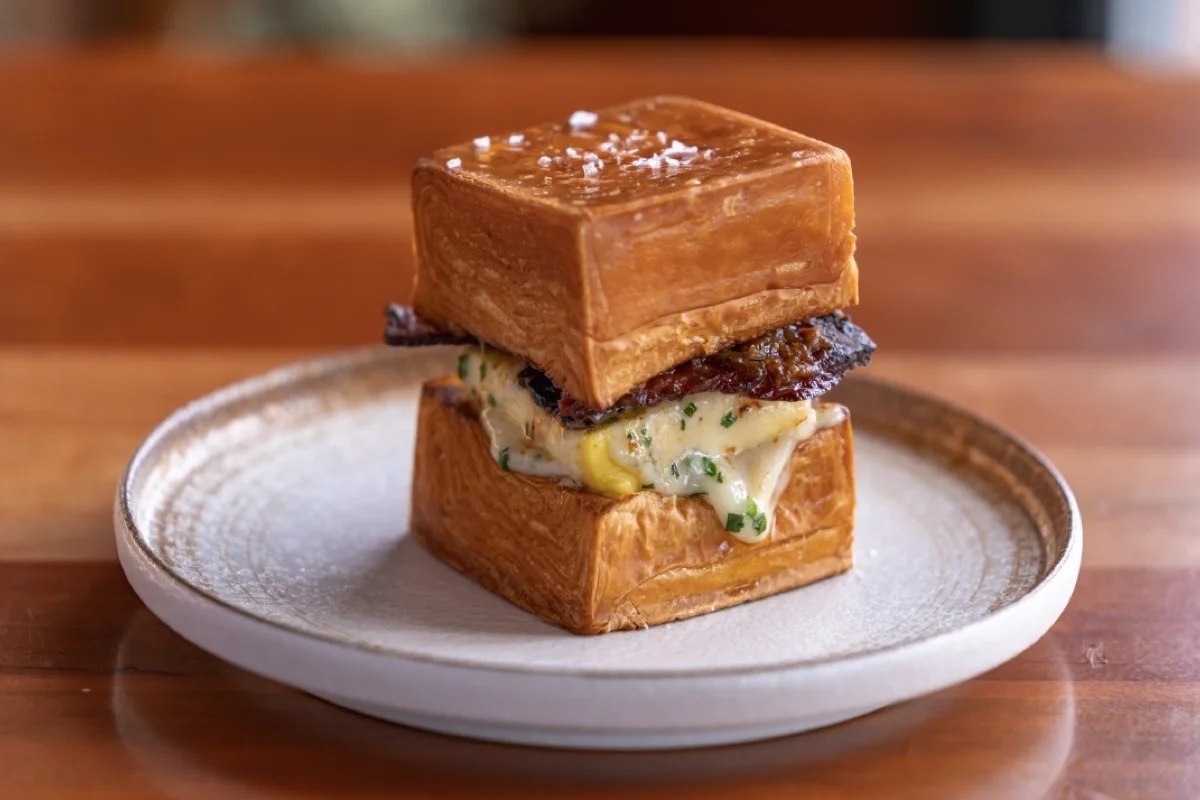
Croissant cubes are menu all-stars at The Butter Milk Ranch, cropping up in sweet applications as well as savory ones, like this breakfast sandwich, with farm egg, housecured bacon, Gruyère, fresh chives and housemade bacon-onion jam.
Credit: StarChefs
Croissants Eclipse Their Crescent Boundaries
Pushing the limits of lamination through new shapes, textures and flavors
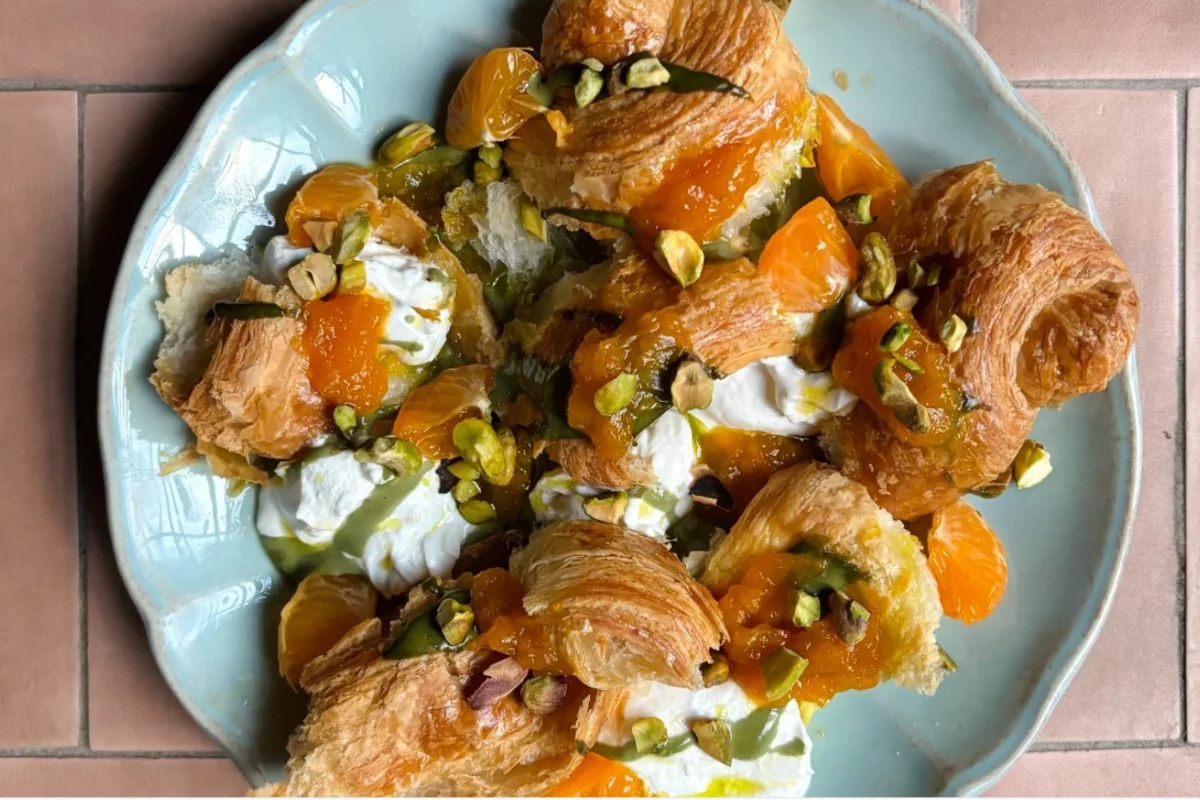
At Bastia, McDonough plays with croissants, but instead of making them unrecognizable or underutilizing the best parts, he tries to maintain the natural texture and shape even when they show up in salads and starters. Classic croissants can be found in the bakery case, but they are also torn up and tossed into a one-of-a-kind dish that he says is akin to a cheese plate. Here, re-toasted croissants are torn along their natural ridges, keeping the ends intact so the pastries aren’t reduced to crumbs but rather take on a striated mouthfeel. McDonough notes that the crescent shape naturally lends itself to the desired mouthfeel, with the two endpoints “providing a nice crunch and the center providing a stage for the buttery, yeasty dough inside.”
Diners find this texture dichotomy in the pieces tossed with the cheese and fresh clementines, and smothered in a Levantine pistachio purée plus shelled pistachios. “They kind of naturally reflect what the initial engineering is,” says McDonough. The chef also tears croissants to make croutons for salads, taking advantage of their buttery richness, eschewing oil and adding just a bit of salt after a light toast.
 Credit: Bastia
 In this brunch special at Bastia, the croissant is strategically torn along the pastry’s natural ridges to maintain its signature mouthfeel and appearance.
“One of the key textural components of croissants is their flake, so over-toasting can easily turn what can be a complimentary flaky garnish into a powdery mess,” he explains. And while he appreciates the way croissants are being leveraged as a base, he still prefers the twists that maintain the crescent shape. “There’s a reason why it’s lasted the test of time,” he says of the pastry that reportedly dates back to the 1600s.
Another croissant purist is Sandra Holl, the chef and owner behind Chicago’s Floriole Cafe & Bakery. Like McDonough, she enjoys the aesthetics of viral trends like spiralized croissants but feels they come with a loss of integrity. “It looks beautiful, but it just doesn’t eat as well as a properly made croissant,” she says. In summer, she cuts croissants open and stuffs them with strawberries and whipped white chocolate ganache. For a savory twist, she tops them with asparagus, ramps or zucchini.
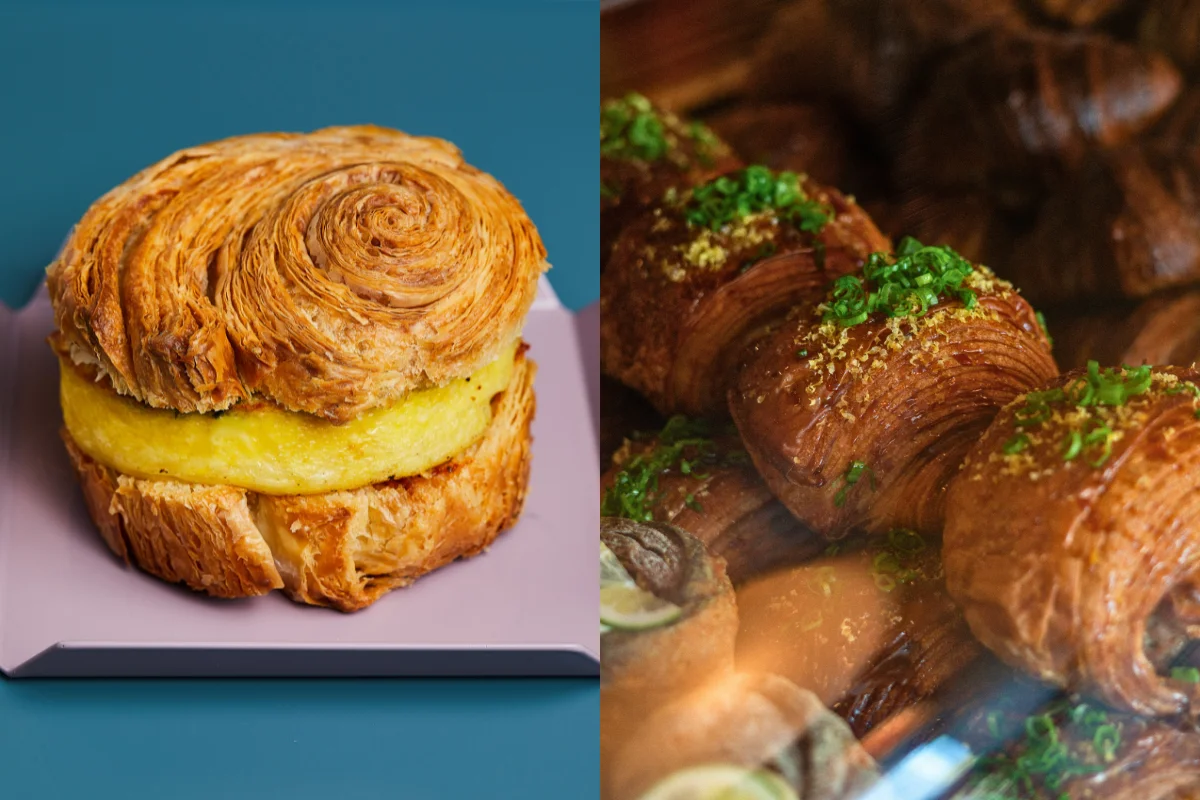
Still, Holl will break with tradition in special cases. For example, she uses a mold to make a croissant bun for an egg patty and tomato jam sandwich. “It’s a spiral shape, but we’re not preventing it from rising. So when people want that perfect, almost hockey puck look, they’re preventing the croissant from rising outside of the pan by placing a weight on top of it,” she explains. “While it gives you a beautiful, perfect shape, the resulting croissants are much denser.” By not confining the croissant, it’s allowed to get airy, “and that’s what people really love about croissant: this juxtaposition between something that is incredibly buttery and light.”
At Del Sur Bakery, also in Chicago, head baker Jesse Lee says lamination was always going to be a part of the program, since it was what owner Justin Lerias had become known for at his pop-ups before opening the brick-and-mortar last spring. What the team wasn’t as certain about was selling a plain croissant. “People don’t really come to Del Sur for the classic flavors, so we wanted to make sure it had some kind of spin on it,” says Lee.
 Credit: Lucy Hewitt | Maria Meade
 Texture and taste are two hotbeds for croissant innovation: The compact croissant in Floriole’s Breakfast Sandwich (left) sports a denser texture, while Del Sur Bakery’s Longanisa Croissants (right) feature nutty, roasted notes from adding toasted rice to the dough.
That spin begins with the dough: The Filipino bakery, which also highlights Midwestern products, leverages Minnesota wild rice and Chinese forbidden rice to add nutty, roasted notes to the flour that’s at the foundation of its toasted rice croissants. The rice is par-cooked and aggressively toasted on sheet trays before being ground up. The blended flour is turned into a porridge so the croissants don’t dry out, and the result is a croissant that looks like the classic, but offers toastier notes and a deep, whole-wheat color.
Del Sur is also known for its Longanisa Croissant, which looks more like pain au chocolat, but instead of sweet, it skews savory (and sweet, spicy and garlic-y) with housemade longanisa sausage stuffed inside and a soy glaze, cured egg yolk and chives on top. Resembling more of an almond croissant is the Pumpkin Seed Croissant, in which a rice-toasted, laminated croissant is dipped in pandan-vanilla syrup. It’s cut open and pepita frangipane is layered inside. “After it gets baked, we add pandan namelaka sauce on top and garnish with more pepitas,” Lee says.
Owner Alyssa Gangeri of The Butter Milk Ranch also knew lamination would be a strong focus at her bakery in Nashville, Tenn., from grab-and-go counter options to a full brunch menu. “We wanted to bridge the gap between pastry and savory, and I knew that if I could create a really cool pastry counter, it would drive business,” she recalls. “Incorporating those croissants into a menu item would also increase my profit margin and make us stand out.”
Among the counter items that took off were the breakfast cubes, which show up in sandwiches, sweet applications and as the base for Benedicts. “Right out of the gate, we were selling around 200–300 cubes a day, and everyone who knows lamination knows it’s a multi-day process,” she says. To make them, she bakes the croissants in 3×3-in. cube-shaped molds, a technique she’d seen in Asia, but nowhere else. Getting the fold down was important, and Gangeri tried different styles from accordion to stack until she attained the familiar pull-apart layers of a croissant. “But at the same time, it’s even more packed full of layers because it’s compressed inside like a mini Pullman loaf,” she explains. “It’s not just a cube—it’s a compressed cube, so all those layers are amplified.”
Guests became immediately enamored, and once The Butter Milk Ranch was able to source more molds (there was a hold-up after COVID), the cubes showed up all over the menu from breakfast sandwiches to a “crookie” with raw cookie dough to an open-faced base for the house Benedicts.
 Credit: Southern Social
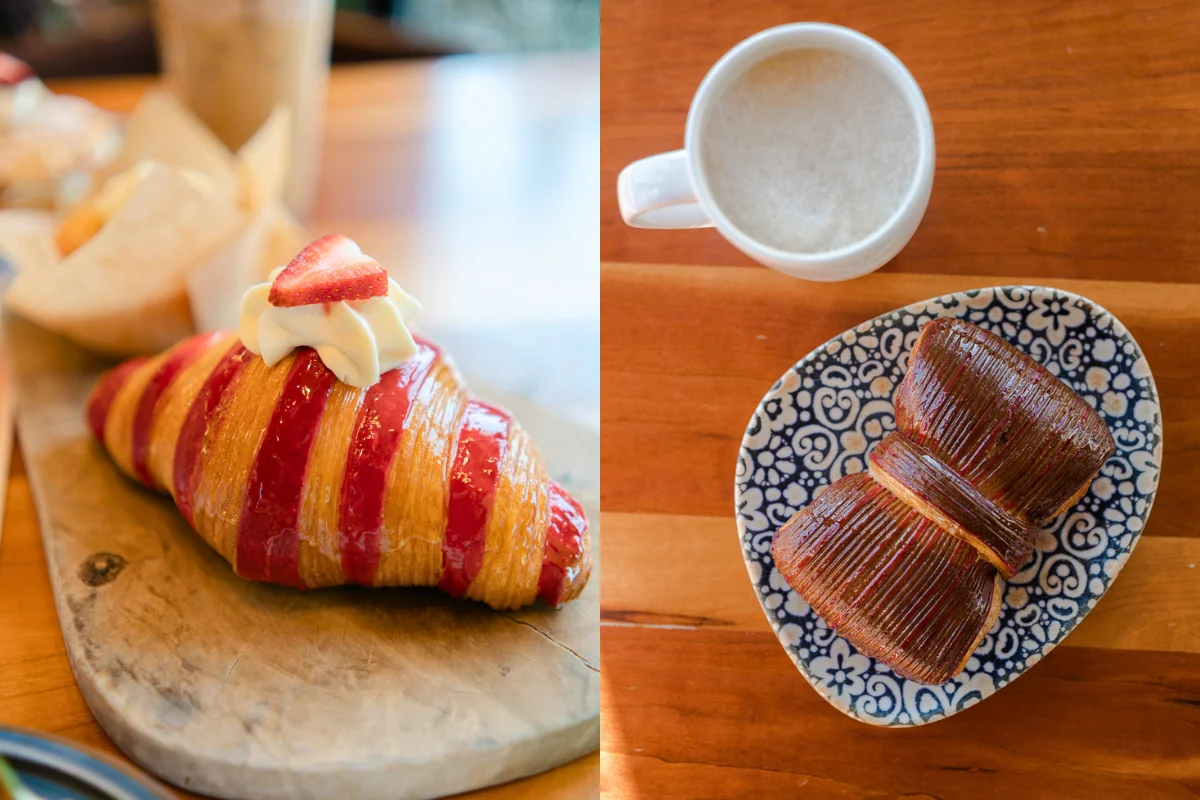
 At The Butter Milk Ranch, specialty croissant offerings include the TN Strawberry and Cream Croissant, filled with strawberry compote and mascarpone whipped cream (left), and bow-shaped, cross-laminated special, featuring chocolate mousse and cherry jam (right).
The Butter Milk Ranch also offers about a dozen rotating croissant flavors, like chocolate babka, salted honey butter and seasonal versions like strawberry short cake. The restaurant serves a cross-laminated, bow-shaped croissant with chocolate mousse and cherry jam at Christmas, and offers a cannoli year-round as an homage to Gangeri’s Italian heritage. The tubular croissants are filled with a fresh mascarpone cream, and the ends are dipped in dark chocolate and Sicilian pistachios.
“It’s all the classic flavors of a cannoli put into a croissant,” she says. Her team has also played around with a chicken Parmesan croissant and pull-apart sharable croissants for a chicken salad sandwich,” she says. “Croissants are an awesome application to use for pastry because they can be sweet, and they can be savory. It’s one of the hardest pastries to make and both time and temperature are factors.”
Still, it’s worth the effort to give customers something unique that they’ll not only want to photograph but also come back for. “Food should be an experience and I think if it can be picture worthy and taste delicious, the last thing is the experience, from the packaging to how it’s served to how it’s eaten,” Gangeri adds. “I think food is something that should always be shared and it’s how we lean into that is important.”
About the Author
 Liz Grossman is the former editor-in-chief of Plate, the award-winning magazine that served the professional chef industry. As co-founder of the nonprofit storytelling series Between Bites, she is passionate about live storytelling and giving back to Chicago’s food community. Liz has moderated and spoken on panels for FAB, Mise, Niman Ranch, Worlds of Flavor and PlateTalks. She currently writes Chicago’s Hit List for Resy and contributes to Chicago magazine, Foodservice Director and Restaurant Development + Design. Follow her on Instagram at @elizabites_ChiClick to Read More Stories by Liz Grossman
Top 10 Trends 2026

Best of Flavor 2025

Trends on the Horizon The next chapter in flavor inspiration
Flavor Trends, Strategies and Solutions for Menu Development ...
