




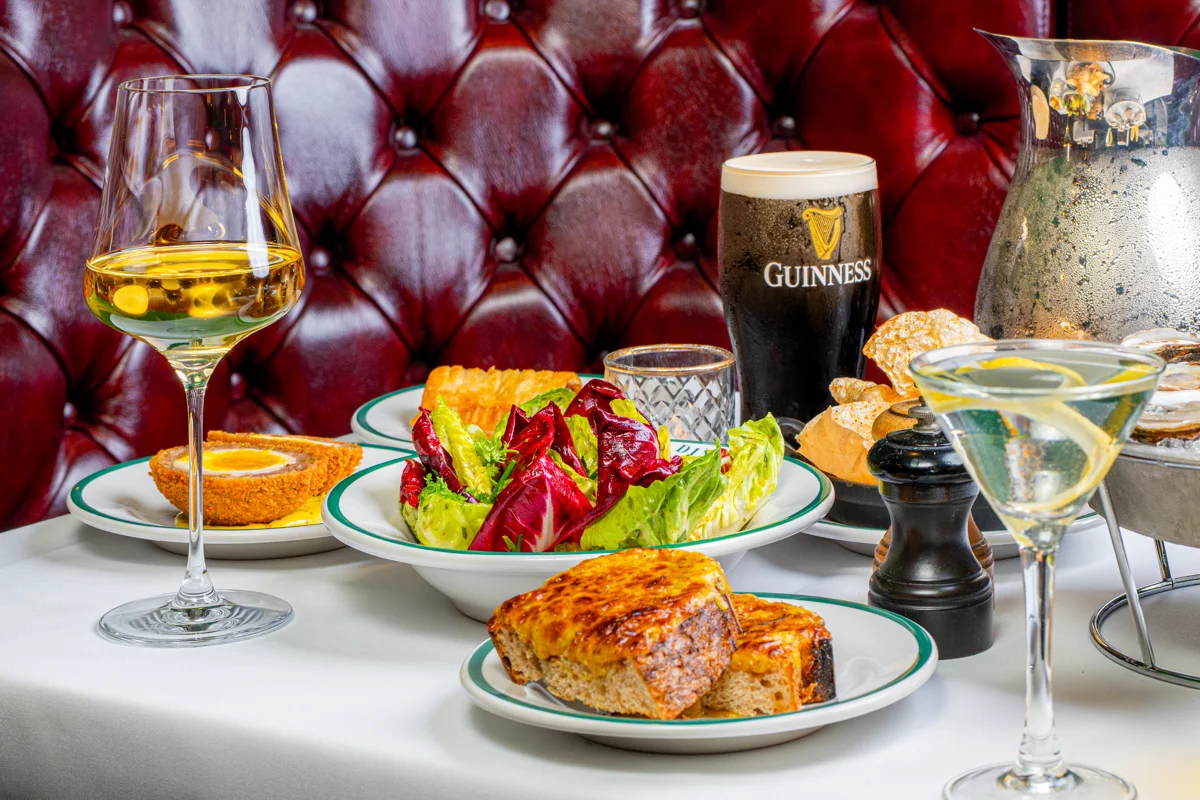
English pub fare is shedding its bland reputation. Chef-driven concepts like Dingles Public House are elevating the classics through high-quality ingredients and techniques, prompting larger chains to take note and explore the flavorful potential across the pond.
Credit: Jesse Cudworth Photography
The British Pub Invasion
Bringing fresh enthusiasm to an overlooked global cuisine
In the face of an increasingly international dining landscape, British cuisine has all too often been excluded as an exciting source for globally inspired menus. But over the last few years, chefs and guests in search of something both familiar and innovative have found fresh appeal in a place few had thought to look: across the pond.
“I think at its core, British food is comfort food,” says George Dingle, chef and co-owner of the eponymous Dingles Public House in San Francisco, where the menu embraces and elevates dishes not often given the star treatment, like sausage rolls with brown sauce and country bread with malt butter. “And in a world that is moving faster than people really would like it to, there is an increased demand for nostalgia and approachability.”
English-inspired dishes are popping up everywhere in the U.S., from casual chains to full-scale pubs. On the former front, Cracker Barrel jumped on the British bandwagon two years ago when it introduced the limited-time Hashbrown Casserole Shepherd’s Pie, featuring a mound of fluffy mashed potatoes topped with savory beef stew and crispy hash browns. By refining and honoring the classics, as well as celebrating the diversity of contemporary England, American restaurants are setting the stage for a new, delicious British invasion.
Right Proper Updates
Part of the charm of traditional British food is its simplicity: Rarely does a dish demand a complex spice blend or finicky presentation. So when it comes to elevating homey recipes like fish and chips or meat pies, well-chosen ingredients and refined technique are the best way to make the dish sing.
“There’s a real duality to the cuisine,” says Chloe Johnson, executive chef at The Dandelion, a cozy British-style pub in Philadelphia. “It’s incredibly comforting and approachable, but there’s also a lot of room for technique, refinement and creativity. I think that combination is part of what makes British pub food so compelling right now. You can recognize the dish immediately, but there’s still an opportunity to experience it in a new way.”
 Credit: STARR Restaurant Group
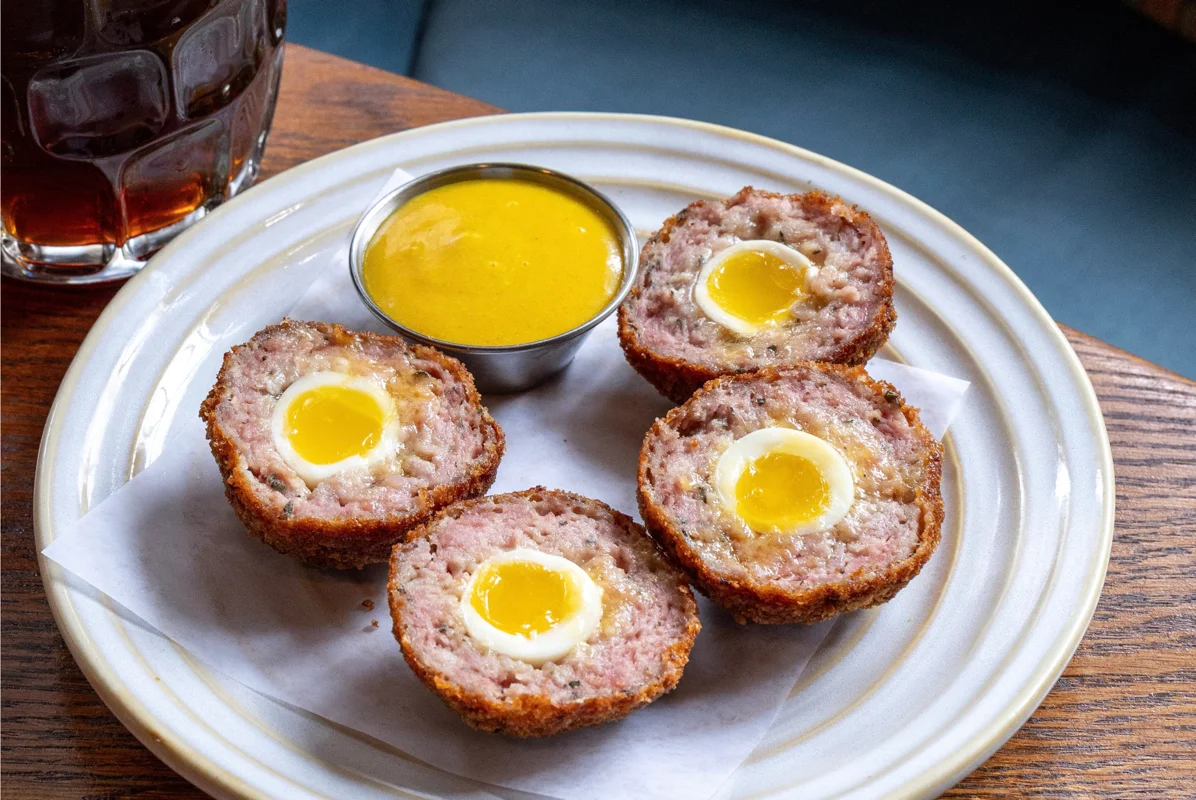
The Dandelion’s Scotch eggs feature quail eggs, allowing the sage- and white pepper–seasoned sausage to play a more prominent role. A side of tangy mustard serves as a bright finisher.
Both Dingles and The Dandelion take this approach with their Scotch eggs, a nostalgic afternoon snack and British picnic basket staple. Often found in the supermarket grab-and-go section, it usually consists of a boiled egg wrapped with ground sausage, then breaded, fried and eaten cold.
Dingle says all the elements of a great dish were already there—it just needed a little love. “I want people to recognize the food but be surprised by how it makes them feel,” he explains. His version focuses on simple, clean technique: A rich soft-boiled egg is enveloped in a blend of house-ground pork sausage, then coated with breadcrumbs and deep-fried. It’s finished in the oven to preserve the crispy, crunchy coating while the sausage stays juicy and the egg perfectly runny. A punchy English mustard dip on the side helps cut the richness.
At The Dandelion, Johnson’s Scotch eggs flips the script on the star of the show. “Rather than making the egg the dominant element, I shifted the proportions to put more emphasis on the sausage,” she explains. She starts by using a small, intensely rich quail egg then blends the pork filling with subtly sweet sage and white pepper to make it shine while still being delicate enough to not overwhelm the egg. Like Dingle, she serves it with a tangy English mustard sauce to “bring the whole dish into focus.”
Chips Off the Old Block
No British pub would be complete without chips, but how do they differ from American fries? A lot comes down to the cut—chips are thick wedges with fluffy interiors, while the quintessential American french fry is a thin, crispy strip. And there’s one more key, Dingle says: “Proper chips,” like those on his menu, are triple-cooked, taking two trips to the fryer for a perfectly crispy, golden exterior.
Even fast food is getting in on the chip game. Wendy’s recently brought back its popular pub-inspired fall menu, including the Bacon Pub Fries, featuring thick-cut potatoes topped with beer cheese, shredded cheddar and bacon crumbles. The company describes the LTO as what one would “come to expect at your neighborhood pub.”
 Credit: Jesse Cudworth Photography
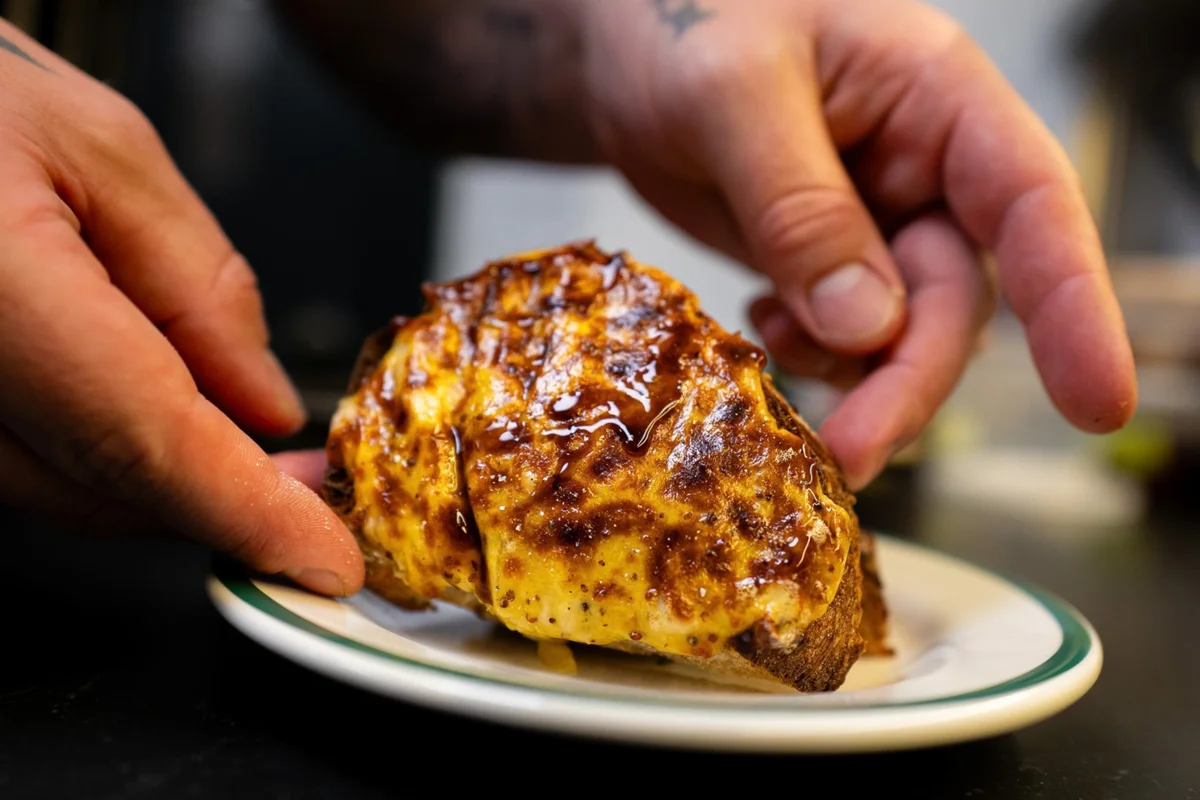
Dingles serves an upscale yet traditional Welsh rarebit (pictured), but other operators are playing around with this regional specialty— some are even incorporating it into chili chips.
Not only is the perfect chip an excellent way for a restaurant to prove its British bona fides, but it also provides a blank canvas for experimentation via toppings and condiments. Piccadilly Pub, a “neighborhood chippy” in Chicago, devotes an entire section of the menu to chip variations. The lineup includes the Irish Spice Bag, with pickled chiles, a house five-spice blend and curry sauce, as well as a more traditional version, served with malt vinegar aïoli. It also serves Chili Cheese Chips, topped with rarebit cheese sauce and a house chile crisp. And at the historical Virginia tavern Hunter’s Head, which opened in 1750, chips are offered alongside a variety of British-inflected condiments like five-onion gravy, tartar sauce and curry.
Britain Past and Present
The inclusion of curry alongside other common British options was no random accident. Generations of migration to the island, particularly from formerly colonized parts of South Asia, have changed the DNA of what’s considered traditional English cuisine. On today’s pub menu, guests are as likely to find tikka masala as mushy peas.
Armitage Alehouse in Chicago draws on Indian-British fusion for dishes across every section of its menu. Bittersweet chicory-mango-paneer salad is served with maple-roasted cashews and a bright citrus vinaigrette; a decadent spiced lamb pot pie is seasoned with garam masala; crispy Bombay potatoes are enlivened through an herbaceous lemongrass chutney; and oven-charred naan, with spreads like whipped feta, serves as a staple offering.
Philadelphia’s Dandelion is also double-dipping on international flavors. The spice-flecked deviled eggs are served with a Madras curry, while burnished vermillion tandoori chicken sits atop a cloud of coconut basmati rice dotted with almonds, pistachios and raisins.
Indian isn’t the only cuisine The Dandelion is drawing from. When restaurant group owner Stephen Starr recently visited London, he noted the rise in popularity of rösti—McDonald’s UK even launched its own version. The infinitely customizable Swiss potato pancake dish (which, like proper chips, requires par-boiling before frying) has taken pub menus by storm, and Johnson was tasked with making it her own.
 Credit: STARR Restaurant Group
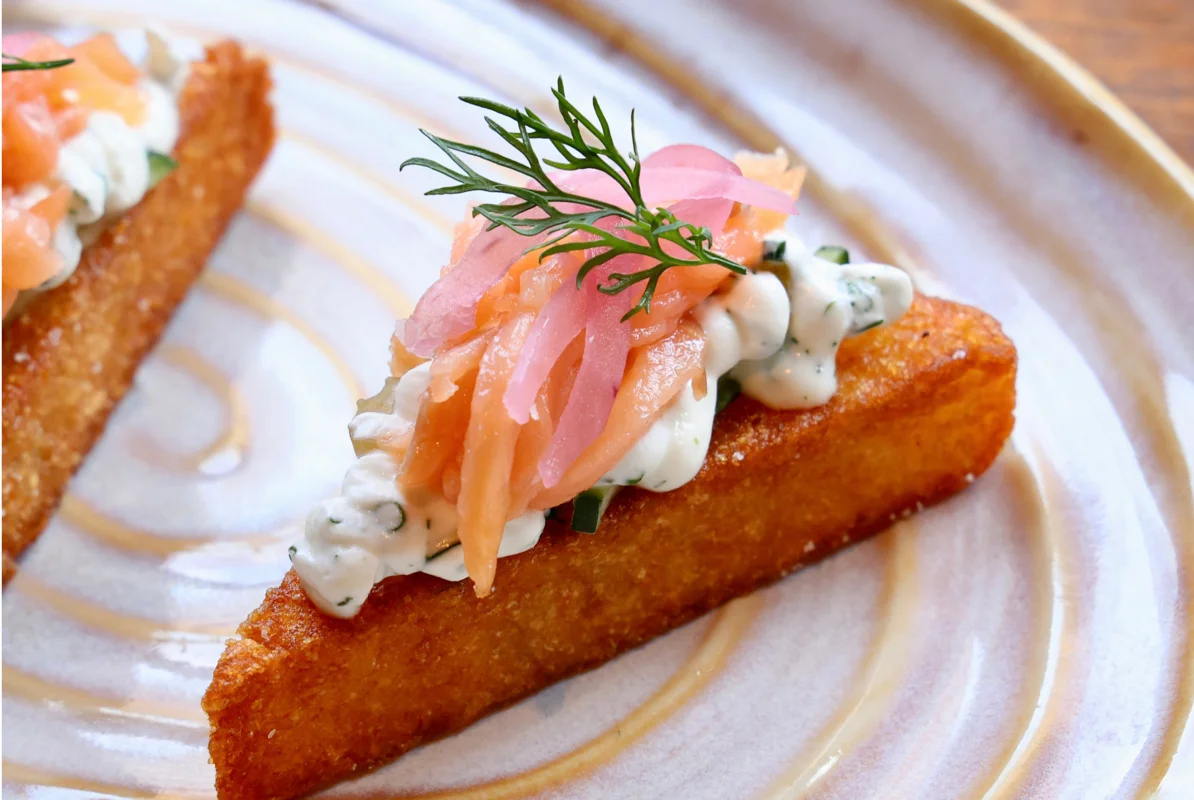
Swiss rösti is a natural addition to pub-inspired menus. The Dandelion’s twist features an extra crunchy, wedge-shaped potato pancake topped with herbed crème fraîche and smoked salmon.
“I wanted the potato to remain the soul of the dish,” Johnson says. “The goal was a rösti that was deeply golden and crisp on the outside but light and airy inside.” In her take, shredded potatoes are molded into a unique wedge shape and fried, creating plenty of crunchy, craggy corners for textural contrast against the creamy toppings. The rösti is then layered with fresh, julienned cucumber, a smear of herbed crème fraîche and smoked salmon. It’s all finished with two different pickled elements to balance the richness: celery for acidity and subtle heat and red onion for bright sweetness. “Every component has character and a purpose, but the goal was for the dish to still feel cohesive and approachable,” Johnson says.
Whether you’re creating a classic pub experience from scratch or bringing a bit of British flair to an existing menu, Johnson says it’s all about balancing the comfort of the past with a bit of contemporary creativity: “I think the strongest menus create that conversation between the two—preserving the classics people love while creating opportunities to surprise them.”
About the Author
 Leigh Kunkel is a freelance journalist with more than a decade of restaurant industry experience as a server, bartender and sommelier. She has written about restaurant operations for B2B publications, as well as foodservice brands, including Beam Suntory and Dawn Foods. She specializes in covering flavor, ingredient and cuisine trends. Leigh has also covered the food and beverage world for a wide range of consumer outlets such as The New York Times, Eater and Vinepair.Click to Read More Stories by Leigh Kunkel
Ranch Pop Rocks, Garden Cocktails and Pumpkin Everything Exploring microtrends, one bite and sip at a time
Flavor Trends, Strategies and Solutions for Menu DevelopmentProving that the ranch renaissance still...
Scooter’s Coffee: Small Spaces With Menu Might Packing innovation and speedy throughput into drive-thru kiosks
Flavor Trends, Strategies and Solutions for Menu Development[google_sidebar_ad adslug="2026-10-Surround-Vibrant-320x50"...
Delivering Innovation All Over Pizza Menus Sauces, dips and puddings inspire fresh appetizers, sides, desserts and more
Flavor Trends, Strategies and Solutions for Menu Development[google_sidebar_ad adslug="2026-10-Surround-AFP-320x50"...
